
Branded Residences in Thailand: Do Hotel-Managed Condos Really Perform Better?
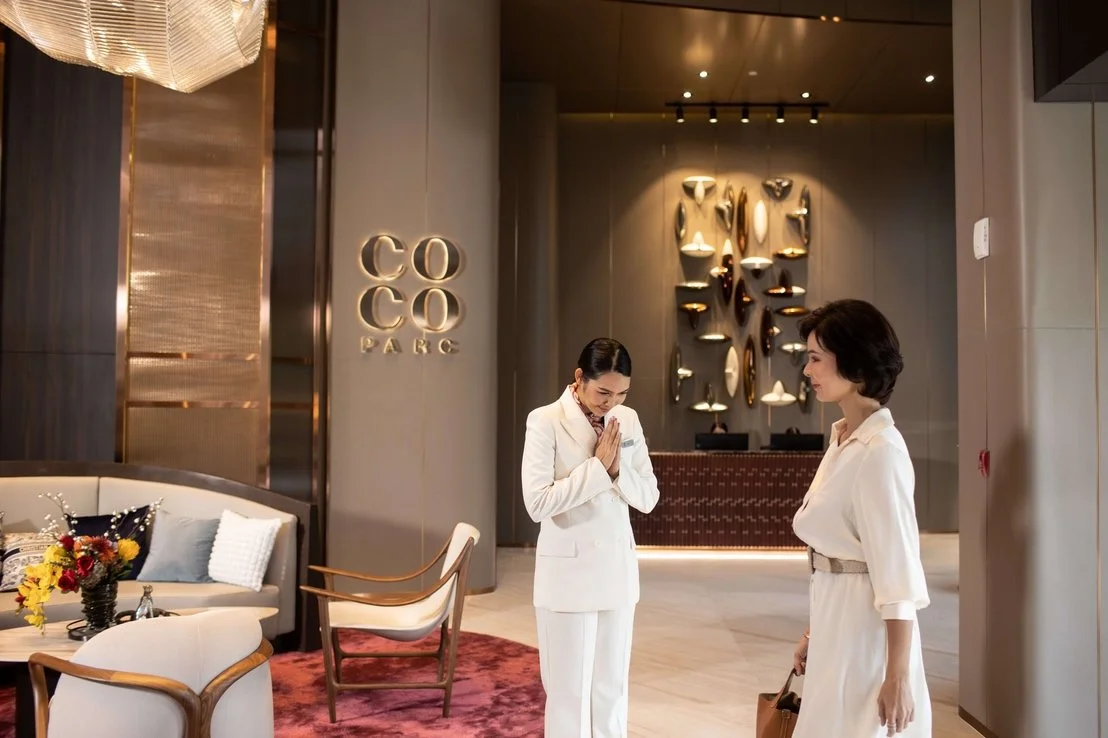
Branded residences have become one of the most talked-about segments of Thailand’s high-end property market. From resort-style developments in Phuket to luxury condominiums in central Bangkok, international buyers are increasingly drawn to properties operated by well-known hospitality groups, promising hotel-grade services, professional management, and a more hands-off ownership experience.
But as the category has grown, so has confusion. Many investors assume that branded automatically means safer, easier, or more profitable. In practice, the reality is more nuanced. Some branded developments outperform their non-branded peers. Others deliver strong lifestyle value but more modest financial returns. And in several cases, well-executed non-branded luxury projects quietly outperform branded assets on a net yield basis.
This article examines how branded residences actually function in Thailand, where they make sense, and how they compare to non-branded luxury developments in both Phuket and Bangkok.
Key Takeaways for Investors
- Branded residences: Offer professional management, service consistency, and hands-off ownership rather than guaranteed higher yields.
- Performance drivers: Location, pricing discipline, and rental demand matter more than branding alone.
- Phuket vs Bangkok: Resort markets can support higher-yield branded models; urban markets prioritise stability and lifestyle appeal.
- Non-branded luxury: Well-located, high-quality developments can outperform branded assets on a net yield basis.
- Strategic use: Branding works best as part of a diversified portfolio, not as a standalone investment thesis.
What defines a branded residence in Thailand?
A branded residence is a residential development that is professionally managed or operated by a recognised hospitality group, with defined service standards, maintenance protocols, and long-term brand oversight. In Thailand, this most commonly involves hotel groups such as Accor, Ascott, or Dusit providing full or partial residential management rather than simple marketing affiliation.
Importantly, branding alone does not determine investment performance. The operating model, location, pricing discipline, and rental demand profile matter far more than the logo on the lobby wall.
Why branded residences appeal to international buyers
For overseas investors, particularly first-time buyers in Thailand, branded developments solve several practical concerns at once.
Professional management reduces the operational burden of ownership, especially for short-stay or hybrid rental models. Service standards are more predictable. Furnishing packages, maintenance schedules, and rental programmes are usually clearly defined from day one. For resale, a recognised hospitality brand can also provide familiarity and reassurance to international buyers who may not understand local developers or neighbourhoods.
These advantages are real. However, they come at a cost, usually reflected in higher entry prices, stricter usage rules, and management fees that can reduce net returns.

Phuket: Understanding the Branded and Managed-Residence Landscape
Phuket’s property market offers one of the most developed selections of branded and professionally managed residences in Southeast Asia. For investors, the critical distinction is not only whether a project carries a brand, but how it operates, whether it is hospitality-managed or designed primarily for owner-use flexibility.
Hospitality-managed residences: yield first, lifestyle second
In this segment, projects are structured and run like hotels. Owners participate in a rental pool, personal use is limited, and performance depends on operator efficiency and tourism demand.
ABOV Patong, managed by Ascott, represents the high-yield, hospitality-led end of the market. It is fully serviced with professional management, centralised operations and limited owner occupation. Gross yields are projected around 10–15 %, reflecting a clear short-stay focus and integration within Phuket’s most tourism-driven district.
MGallery Residences MontAzure, under Accor’s MGallery brand, follows a similar managed model but with a more conservative profile. It operates a formal rental pool under a 40/60 revenue share, with marketing, reservations, and operations handled by Accor’s hospitality division. Owner occupation is capped to a limited number of days per year. Projected yields are typically 5–8 %, balanced against strong brand equity and operational consistency.
The Zero Bang Tao bridges the gap between global-brand and independent operators. It combines off-plan entry pricing with a professionally managed nightly rental programme and a 70/30 rental pool among similar unit types. Owners receive semi-annual income distributions, with returns projected at around 11 % ROI. All marketing, guest services and maintenance are handled by the onsite hospitality team, with owners able to reserve personal-stay dates through a dedicated app. With only 85 units, it offers a boutique scale and lower competition for rental demand.
Lifestyle-led residences: long-term living and capital focus
At the lifestyle end of the market, developments prioritise design quality, privacy, liveability, and long-term appeal, while still supporting structured rental income rather than maximising short-stay turnover alone.
Ayana Heights occupies a hybrid position within this segment. Operating as a serviced club residence with hotel licensing, it combines 5-star management, panoramic sea views, and family-friendly layouts with a professionally managed rental model. Owners benefit from both personal-use flexibility and income generation, supported by Layan’s limited supply, year-round demand, and strong positioning for longer stays.
Rather than functioning as a pure yield-maximisation asset, Ayana Heights appeals to buyers seeking a balance between lifestyle quality, capital preservation, and competitive rental performance.
What this means for investors
Phuket now presents three clear investment paths:
Global-brand hospitality residences — internationally branded operations, structured rental programmes, strong marketing reach and predictable income profiles.
Boutique managed residences — smaller-scale projects with professional rental management, higher yield potential, and more agile pricing and operational strategies.
Lifestyle-oriented serviced residences — design-led, residentially focused developments that combine liveability, personal-use flexibility and professionally managed rental income, often favouring longer stays over high-turnover tourism.
Understanding where each project sits on this spectrum is essential when comparing yield expectations, ownership rights, personal-use options and long-term capital positioning.
As explored further in the Phuket Property Market Outlook 2026, location and demand alignment matter more than branding alone.
Phuket: Indicative Rental Yield Ranges by Asset Type & Rental Model (2026)
| Category | Positioning | Typical yield range | Rental structure | Example developments |
|---|---|---|---|---|
| Global-brand hospitality residences | International hotel-branded residences with professionally operated rental programmes. |
5–8% (typical) 10–15% in select projects |
Structured rental pool, capped owner use, hotel-style operations. |
MGallery MontAzure Residences ABOV Patong |
| Boutique managed residences | Smaller-scale projects optimised for short-stay demand and yield efficiency. |
7–11% (typical) |
Managed rental pool with flexible owner access. | The Zero Bang Tao |
| Lifestyle-oriented serviced residences | Residential-led living with strong design, privacy, and longer-stay rental demand. | 6–8% (typical) | Rental pool available; personal use permitted within programme rules. | AYANA Heights |
Bangkok: branding supports lifestyle and stability, not necessarily yield
Bangkok tells a different story. As an urban, professionally driven rental market, yields tend to be more stable but less volatile than resort destinations. Here, branding often enhances lifestyle appeal rather than materially boosting income.
Bangkok is fundamentally a long-term rental market, driven by professionals, expatriates, and owner-occupiers rather than short-stay tourism demand. This shapes how branding affects returns and risk.
Coco Parc, developed by Ananda and managed by Dusit Hospitality Services, is a clear example of a true luxury branded residence in Bangkok. The Dusit operational model focuses on service quality, residential experience, and stable long-term leasing demand, rather than short-stay or high-turnover rental optimisation. For many buyers, this delivers exactly what they want: convenience, prestige, and a well-managed home in a prime location.
However, when comparing performance, high-quality non-branded developments such as Knightsbridge Space Rama 4 demonstrate that strong design, connectivity, and pricing discipline can achieve comparable and in some cases stronger net returns without hotel management overheads. At a similar, but slightly lower entry price range to Coco Parc, Knightsbridge Space Rama 4 appeals to investors prioritising transport connectivity, tenant depth, and pricing efficiency over hotel-style services.
At the higher end of the market, Romm Convent represents a different category altogether. While not branded, its ultra-low density, architectural quality, and scarcity positioning place it firmly in long-term capital preservation territory rather than yield optimisation.
As analysed in the Luxury Property in Bangkok: 2026 Market Outlook, branding in Bangkok is best viewed as a lifestyle and execution enhancer, not a guaranteed performance lever.
Bangkok: Branded vs Non-Branded Luxury Residences
| Category | Branded Residences | Non-Branded Luxury Developments |
|---|---|---|
| Typical entry pricing | Mid to high, reflecting brand affiliation and managed services | Often lower for comparable locations due to reduced management overhead |
| Management model | Hotel or professional operator-led, service-focused | Owner-led or third-party management, more cost-controlled |
| Rental profile | Primarily long-term leasing with stable, predictable demand | Primarily long-term leasing, often with stronger net efficiency |
| Indicative yield positioning | Typically mid-range, prioritising stability over maximisation | Comparable or higher net yields where pricing discipline exists |
| Owner flexibility | More restrictions on use, furnishing, and alterations | Greater control over use, interiors, and leasing strategy |
| Resale appeal | Strong among overseas buyers familiar with the brand | Driven by location, scarcity, design quality, and price efficiency |
The real trade-off investors must understand
The core trade-off is not branded versus non-branded. It is execution versus efficiency.
Branded residences tend to offer smoother ownership, predictable standards, and simpler operations, particularly for overseas buyers. In return, investors accept higher purchase prices, management fees, and reduced flexibility.
Non-branded luxury developments can deliver stronger net yields and greater control, but require more active decision-making around management, furnishings, and resale positioning.
Neither approach is inherently superior. The right choice depends on the investor’s priorities: income stability, hands-off ownership, lifestyle use, or long-term capital preservation.
Conclusion: branding is a tool, not the strategy
Branded residences in Thailand should be viewed as a risk-management and execution choice, not a shortcut to superior returns. In the right locations, particularly where professional hospitality operations genuinely add value, branded developments can outperform. In others, they primarily offer lifestyle assurance, resale familiarity, and ease of ownership.
Equally, some of Thailand’s strongest-performing luxury developments are not branded at all, but succeed through disciplined pricing, strong layouts, and locations aligned with real demand. In these cases, the absence of a brand can actually enhance yield efficiency and long-term flexibility.
For international investors, the key is not choosing between branded and non-branded property, but understanding what role each asset plays within a broader strategy. When viewed through that lens, branding becomes one variable among many, not the defining factor.
Branded Residences in Thailand: FAQ
-
Not necessarily. Branded residences often provide more predictable operations and hands-off ownership, but they do not guarantee higher net yields. In some cases, well-located non-branded luxury developments can achieve stronger net returns due to lower entry pricing and reduced management costs.
-
Often yes, but with more volatility. Phuket’s tourism-driven market can support higher short-term rental yields, particularly in professionally managed projects. Bangkok, by contrast, is primarily a long-term rental market where yields are typically more stable but less aggressive.
-
Hospitality-managed residences operate similarly to hotels, with rental pools, capped owner use, and a focus on short-stay demand. Lifestyle-led residences prioritise liveability, privacy, and longer-term occupancy, while still offering structured rental programmes.
-
No. Yield figures are projections based on assumptions around occupancy, pricing, and operational efficiency. Like all property investments, actual performance depends on market conditions, management execution, and demand cycles.
-
Yes. In both Phuket and Bangkok, non-branded luxury developments with strong locations, disciplined pricing, and efficient layouts can outperform branded assets on a net yield basis, particularly where management overheads are lower.
-
The decision should be based on priorities rather than branding alone. Buyers seeking hands-off ownership and operational simplicity may prefer branded residences, while those focused on yield efficiency or flexibility may find better value in non-branded luxury developments.
-
Branding can enhance resale appeal among international buyers unfamiliar with local developers, but long-term resale performance is still driven primarily by location, build quality, scarcity, and pricing discipline.
