
Is Penang a Good Place for Foreigners to Buy Property in 2026?
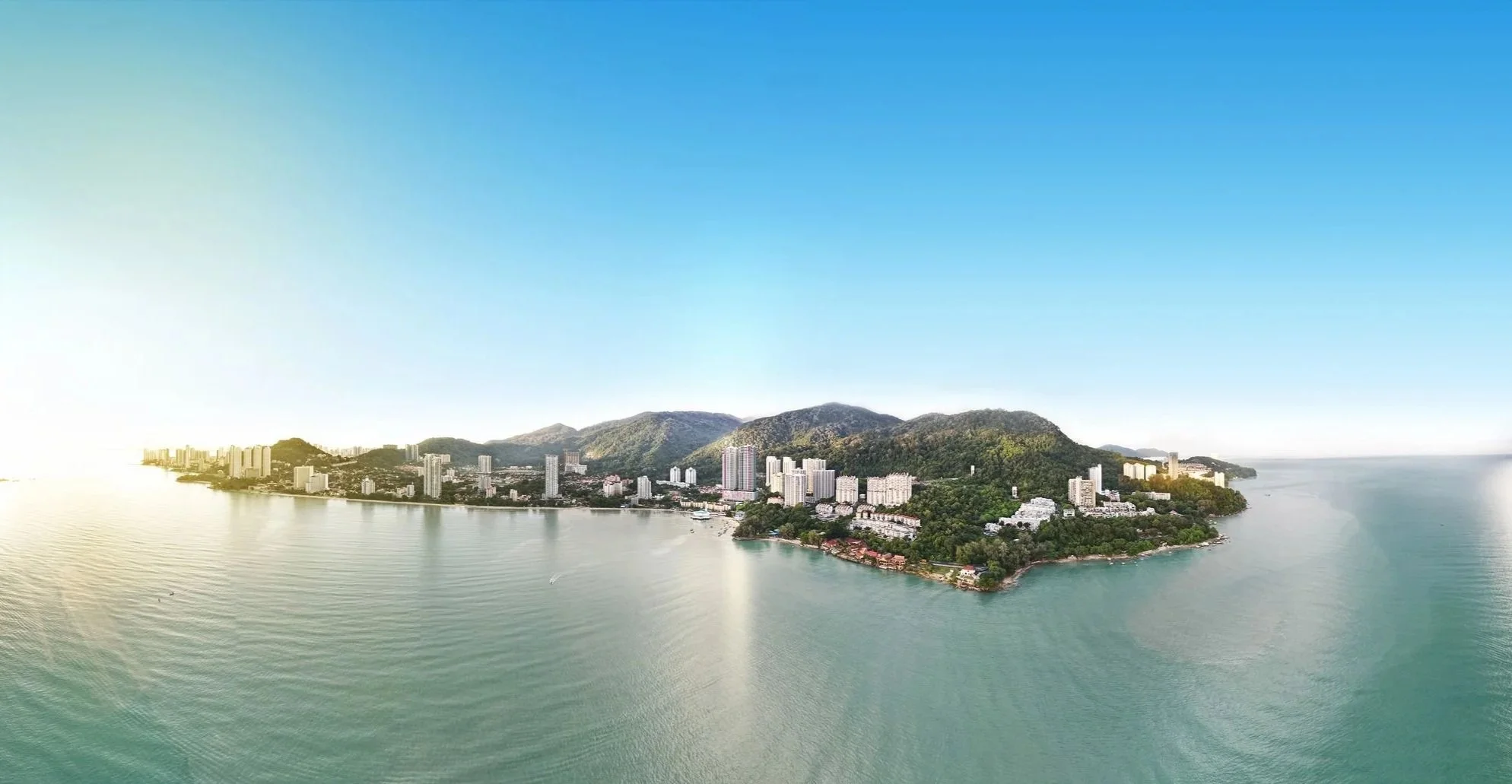
Penang sits in a different category to Malaysia’s larger urban and resort markets. It is neither a high-growth investment hotspot nor a speculative rental market. Instead, it has developed steadily as a liveable island city, appealing to foreign buyers who prioritise lifestyle, stability, and long-term use over short-term returns.
Foreigners can legally buy property in Penang, provided they meet minimum purchase thresholds and comply with state-level ownership rules. These rules are relatively clear but differ depending on whether the property is strata or landed, and whether it is located on the island or the mainland. Importantly, property ownership does not confer any form of Malaysian residency or immigration status.
In 2026, Penang continues to attract a specific type of overseas buyer: those planning extended stays, semi-retirement, or a future base in Southeast Asia. This guide examines whether Penang makes sense for foreign buyers, based on ownership rules, pricing realities, lifestyle factors, and who the market is and is not suited to.
Key Takeaways for Foreign Buyers
- Foreign ownership is permitted: Foreigners can buy strata property in Penang, subject to minimum purchase thresholds set at state level.
- Penang is lifestyle-led: The market prioritises long-term livability and personal use rather than short-term rental yields.
- Property ownership does not grant residency: Buying property alone does not automatically qualify foreign buyers for Malaysian residency.
- Entry pricing is structured: On Penang Island, most foreign-eligible condominiums fall at or above RM 1 million.
- Best suited to long-term buyers: Penang appeals most to semi-retirees, families, and lifestyle buyers planning extended stays.
Why Foreign Buyers Consider Penang
Penang’s appeal lies less in investment performance and more in day-to-day quality of life. The island combines coastal living with established infrastructure, making it function more like a compact, self-contained city than a resort destination.
At its cultural core is George Town, a UNESCO World Heritage Site known for its preserved colonial architecture, historic shophouses, and layered history. Malay, Chinese, Indian, and Peranakan influences are deeply integrated into everyday life, shaping neighbourhoods, traditions, and the way the city functions. For many foreign buyers, this sense of lived-in authenticity is a key differentiator from more commercially driven urban or resort markets.
Food culture is another defining part of daily life in Penang. The island is widely regarded as Malaysia’s culinary capital, with a strong street-food culture alongside established cafés and restaurants. For long-stay residents, this is not a visitor attraction but a practical quality-of-life factor — affordable, diverse, and embedded into everyday neighbourhood living rather than concentrated in tourist districts.
Healthcare is one of Penang’s strongest pull factors, with several well-regarded private hospitals that serve both locals and international patients. Education is another consideration, with a mix of international, private, and local schools available across the island. Together, these fundamentals make Penang viable for longer stays rather than short-term visits.
Modern amenities sit alongside this heritage backdrop. Areas such as Gurney Drive and Gurney Paragon offer contemporary shopping, dining, and waterfront living, while Batu Ferringhi provides a more relaxed coastal environment that appeals to lifestyle buyers and long-stay residents. This allows buyers to choose between urban convenience and slower-paced coastal living within a relatively small geographic area.
Compared with Kuala Lumpur, Penang is less dense and more residential, with a slower pace of life. Compared with Singapore, it is substantially more affordable, though it does not offer the same depth of employment or global connectivity. Unlike markets such as Phuket or Bali, Penang is not driven primarily by tourism cycles, contributing to a more stable, year-round living environment.
As a result, Penang tends to suit foreign buyers who are planning ahead, for retirement, family relocation, or extended personal use, rather than those seeking rapid capital appreciation or aggressive rental returns.
Can Foreigners Buy Property in Penang?
Yes, foreigners are legally permitted to buy property in Penang, but eligibility depends on property type, location, and price, all of which are governed by state-level rules under Malaysia’s National Land Code.
In practice, foreign buyers are restricted to higher-value residential stock, with different minimum thresholds applying depending on whether the property is located on Penang Island or the mainland (Seberang Perai), and whether the purchase is strata or landed.
Foreign ownership is most straightforward in strata-titled developments, particularly new or near-new condominiums sold directly by developers. Landed homes are subject to significantly higher thresholds and are far less commonly purchased by overseas buyers.
Ownership Thresholds Explained
The table below summarises the current minimum purchase prices for foreign buyers in Penang, based on official state guidance and Bar Council conveyancing circulars.
| Location | Property type | Minimum purchase price (RM) |
|---|---|---|
| Penang Island | Strata (condominiums & apartments) | 1,000,000 |
| Penang Island | Landed residential property | 3,000,000 |
| Mainland (Seberang Perai) | Strata (condominiums & apartments) | 400,000 – 500,000 |
| Mainland (Seberang Perai) | Landed residential property | 1,000,000 |
Important context:
While mainland thresholds are lower on paper, the majority of foreign demand remains concentrated on Penang Island, where lifestyle, healthcare access, international schools, and long-term livability are stronger. As a result, most overseas buyers in practice are operating within the RM 1 million and above bracket on the island, even when lower thresholds technically exist.
All foreign purchases require State Authority consent, and certain categories remain prohibited, including low-cost housing, Bumiputera-allocated units, and Malay Reserved Land

What Do Properties in Penang Cost?
In 2026, modern, sea-facing strata developments along the island’s northern coastline, pricing is commonly marketed from from approximately RM 900,000 to RM 2.0 million+ for larger or premium sea-view units, with compact one-bedroom units at the lower end and larger dual-key, duplex, or premium-view units at the upper end. As unit sizes increase beyond 1,000 sqft, prices move decisively above the RM 1 million mark.
This means that while some units may be marketed below RM 1 million, foreign buyers are functionally purchasing from RM 1 million upwards on Penang Island, because that is where eligibility, availability, and suitable stock align.
Beyond the headline purchase price, buyers should also budget for standard transaction costs, including legal fees, stamp duty, and state-imposed levies on foreign ownership. These are generally predictable and do not materially alter affordability, but they should be accounted for early to avoid surprises.
What Penang does not offer is a broad supply of low-entry, high-yield property aimed at speculative investors. Pricing reflects livability, scarcity of coastal land, and long-term residential appeal rather than short-term rental optimisation.
Rental Demand vs Lifestyle Use
Most rental demand on Penang Island is longer-stay and lifestyle-led, rather than transient. Tenants typically include expatriates on fixed-term contracts, families linked to international schools, returning Malaysians, and long-stay foreign residents who value stability, space, and location over hotel-style turnover. This shapes both achievable rents and occupancy patterns.
Short-stay rental activity does exist, particularly in coastal and tourist-adjacent areas, but it is not the dominant driver of the market. Penang does not operate like a resort island where nightly rates and peak-season surges underpin returns. Instead, rental performance tends to be flatter and more consistent across the year, with fewer extremes at either end.
As a result, rental yields in Penang are generally modest, especially when compared with more speculative or tourism-heavy markets. Buyers who approach Penang expecting aggressive yield performance often find expectations misaligned. Conversely, buyers who view rental income as a way to offset holding costs during periods of personal use tend to be better aligned with how the market functions.
For many foreign buyers, the primary value of Penang property lies in personal use, long-term livability, and optional rental flexibility, rather than maximising short-term returns. This is why developments with strong layouts, liveable unit sizes, and practical locations often outperform purely yield-optimised products over time.
In short, Penang works best as a lifestyle-first market with rental as a secondary consideration, not the other way around.
Residency & MM2H – What Buyers Need to Know
Property ownership and residency in Malaysia are often discussed together, but they are not the same thing, and this distinction is important for foreign buyers considering Penang.
Buying property in Penang does not automatically grant residency, long-stay rights, or immigration status. Residency is governed by separate programmes, each with its own eligibility criteria, financial requirements, and ongoing obligations.
The most widely known option is Malaysia My Second Home (MM2H), alongside other long-term residency routes such as PVIP. These programmes are administered independently of property transactions, even though property purchase is a mandatory requirement in most Malaysian residency programmes.
In practical terms, this means:
You cannot obtain residency simply by buying property.
You cannot rely on a property purchase alone to qualify.
Residency approval depends on meeting the programme’s full criteria, not just owning real estate.
Where property does come into play is after eligibility is established. Under current frameworks, approved participants are typically required to purchase qualifying residential property within defined price bands and timeframes, depending on the programme tier. The property itself is therefore a condition of participation, not a shortcut to approval.
Because residency rules can change, and requirements differ by programme and tier, buyers considering Penang as part of a longer-term relocation or semi-retirement plan should confirm residency eligibility before committing to a purchase. Treating property as a lifestyle or asset decision first and residency as a separate legal pathway, helps avoid confusion and costly assumptions.

Who Penang Is Best Suited For
Penang tends to appeal most to buyers who prioritise livability, stability, and long-term use over short-term performance. It is not a market that suits every foreign buyer, but for the right profile, it can be a highly practical and rewarding choice.
Semi-retirees and long-stay residents are among the strongest fit. Penang’s established healthcare system, slower pace of life, and relatively compact geography make day-to-day living manageable without the intensity of larger regional cities. Buyers in this group often value ease of living and continuity more than rapid capital movement.
Families relocating or planning extended stays also tend to find Penang attractive. International schools, reliable healthcare, and residential neighbourhoods designed around everyday living, rather than tourism, support longer-term settlement. For these buyers, property is usually viewed as a base rather than a trading asset.
Penang also suits lifestyle-led buyers who want regular personal use with the option to rent selectively when not in residence. These buyers typically focus on location, layout, and build quality, accepting moderate rental income as a secondary benefit rather than a core objective.
By contrast, Penang is generally less suited to short-term speculators or yield-driven investors. Buyers looking for rapid turnover, aggressive rental optimisation, or high volatility tend to find better alignment in markets structured specifically around those dynamics.
In essence, Penang works best for buyers seeking long-term usability, personal enjoyment, and steady ownership, rather than short-term financial engineering.
Final Verdict – Is Penang Worth Considering in 2026?
Penang remains a viable option for foreign buyers in 2026, but it is best understood as a lifestyle-led market rather than a performance-driven one. Its appeal lies in long-term livability, healthcare access, and everyday practicality, not in short-term yield or speculative upside.
For buyers who value stability, personal use, and a measured approach to ownership, Penang offers a mature residential environment with clear rules and a well-established expat presence. For those expecting aggressive returns or rapid market movement, expectations may be misaligned.
As with any overseas purchase, success in Penang comes down to understanding the rules, matching the market to your objectives, and avoiding assumptions based on other regions. Approached on its own terms, Penang can play a sensible role within a broader lifestyle or long-term planning strategy.
If you’re exploring property options in Penang, you can view our current selection of foreign-eligible developments on our Penang property page.
FAQs About Buying Property in Penang
-
Yes. Foreigners are permitted to buy property in Penang, subject to state-level rules and minimum purchase price thresholds. Eligibility depends on the property type (strata or landed) and location (island or mainland).
-
On Penang Island, most foreign buyers should expect to purchase strata property from around RM 1 million and above, depending on eligibility rules and available stock. Minimum thresholds are higher for landed property and vary on the mainland.
-
Yes, but landed property is significantly more restricted than strata property. On Penang Island, foreign buyers can generally only purchase landed residential property from RM 3 million and above, subject to state approval. As a result, most foreign buyers focus on strata-titled condominiums instead.
-
No. Buying property in Penang does not automatically grant residency or long-stay rights. Residency is governed by separate immigration programmes with their own eligibility requirements.
-
Property purchase is a mandatory requirement in most Malaysian residency programmes, including MM2H. However, buying property alone is not sufficient to qualify for residency, as applicants must also meet the programme’s financial and eligibility criteria.
-
Penang is generally considered a lifestyle-led market rather than a yield-driven one. Rental demand exists, particularly for longer stays, but buyers typically prioritise personal use, stability, and long-term livability over short-term returns.
-
Foreign buyers in Penang are often semi-retirees, families, and lifestyle-focused purchasers planning extended stays or long-term use, rather than short-term investors or property flippers.
