
Where Is the Best Place to Buy Property in Bangkok in 2026? An Investor & Lifestyle Guide
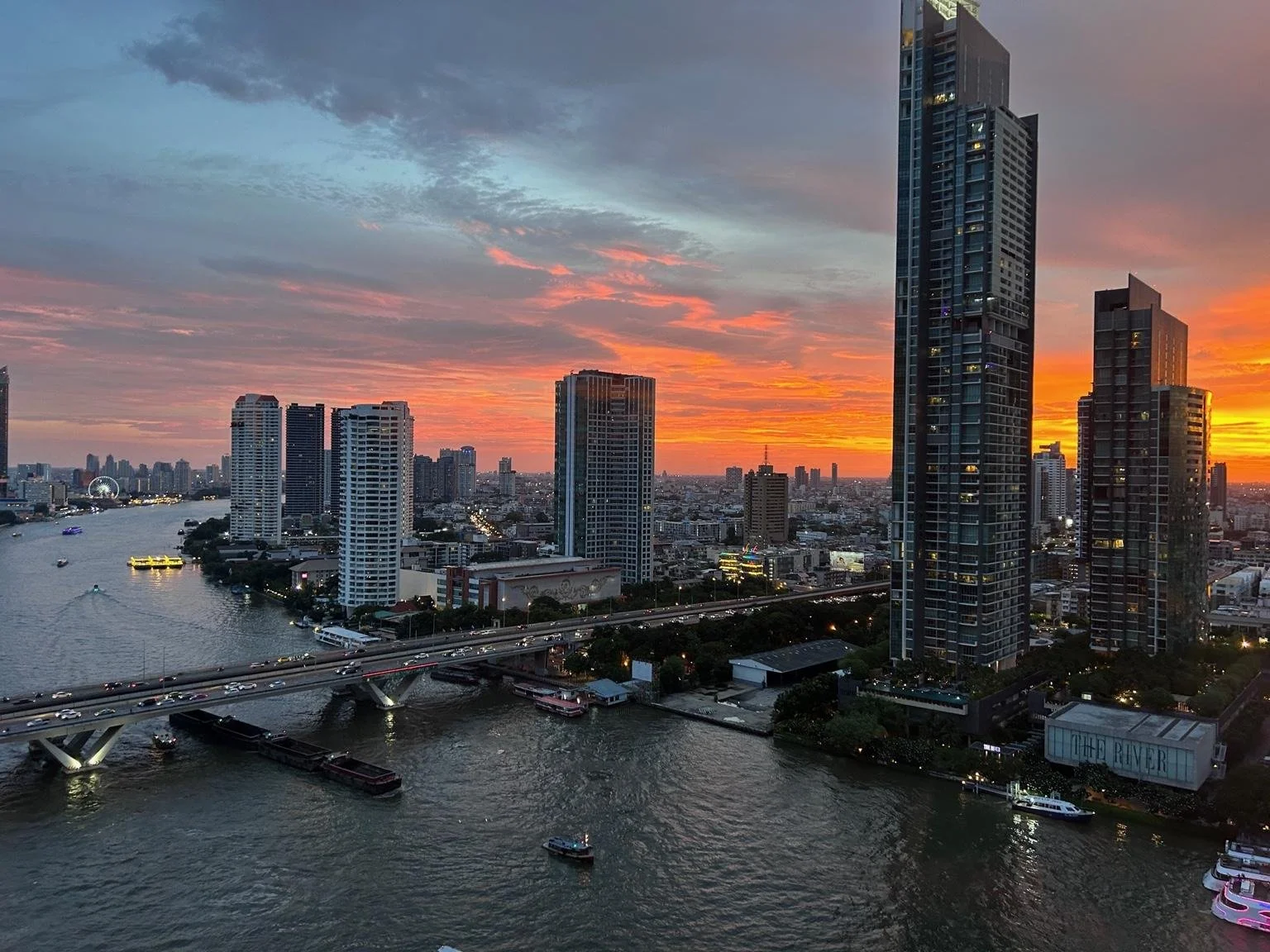
Photo © Alestria | Taken from Shangri-La Bangkok
Why Bangkok still matters for property buyers in 2026
For foreign buyers, Bangkok is Thailand’s most complex property market, not because it is difficult to access, but because value, demand and liveability vary sharply by district, transport access and intended use.
Unlike resort markets, where location choices are often binary, Bangkok’s appeal lies in its depth. It is a layered capital shaped by transport corridors, employment hubs, education clusters and long-established residential neighbourhoods that behave very differently from one another. In 2026, this complexity is precisely why Bangkok continues to attract long-term capital, even as headlines periodically focus on oversupply or market cycles.
Bangkok remains Thailand’s economic and cultural engine. It concentrates the country’s corporate headquarters, international schools, specialist hospitals and regional offices, while also functioning as Southeast Asia’s most connected urban gateway. Infrastructure investment has continued steadily over the past decade, particularly around mass transit, reshaping how residents experience the city and how buyers evaluate convenience, commute time and daily quality of life.
Beyond the numbers, Bangkok is a city shaped by everyday life as much as by commerce. It combines global dining and retail with deeply local neighbourhood life; quiet residential streets sit minutes from major commercial districts, and long-established communities coexist with rapid modernisation. This mix is part of the city’s appeal and also the reason property decisions here require more nuance than in lifestyle-led markets such as Phuket or Chiang Mai.
For foreign purchasers, whether investors, relocating professionals or families, the question is no longer whether Bangkok matters, but where within Bangkok it makes sense to buy. More than almost anywhere else in Thailand, district choice determines outcome. The wrong location can lead to lifestyle friction, weak long-term demand or limited resale flexibility. The right one can deliver usability, stability and optionality over time.
Understanding that distinction is the starting point for making a sensible buying decision in Bangkok.
Key Takeaways for Foreign Buyers
- There is no single “best” area in Bangkok: The right district depends on whether the property is for investment, personal use, or a combination of both.
- Bangkok is a city of micro-markets: Transport access, neighbourhood character and tenant profile matter more than headline location names.
- Rental demand is professional-led: Unlike resort markets, Bangkok rental performance is driven by long-stay residents, not tourism.
- Condos dominate foreign ownership: Freehold condominium purchases are permitted within foreign ownership quotas; landed homes are typically leasehold.
- Property ownership does not grant residency: Visa and residency planning must be considered separately from property purchases.
Understanding Bangkok before choosing a district
To make sense of Bangkok’s property market, buyers need to understand the city itself.
Bangkok is vast and decentralised. What looks close on a map can feel very far in practice, particularly during peak traffic hours. This is why proximity to BTS and MRT lines has become one of the most reliable indicators of long-term value. Access to mass transit does not just affect convenience; it shapes rental demand, resale liquidity and daily quality of life.
The city also feels very different from other Thai markets familiar to foreign buyers. Unlike Phuket or Chiang Mai, Bangkok is not lifestyle-led in a uniform way. It is a working capital first, where residential demand is driven by employment, education and healthcare as much as leisure. Neighbourhood character can change dramatically within a few kilometres, from high-density commercial districts to quiet, residential enclaves with very different resident profiles.
This is where many buyers underestimate Bangkok. Choosing an area based on reputation alone, or assuming all “central” locations behave the same, often leads to disappointment. Some districts favour short-term tenants and liquidity. Others suit families planning to stay for many years. Some appeal to international investors; others primarily serve Thai owner-occupiers.
Understanding these differences before looking at specific developments is essential. In Bangkok, district selection matters more than building choice, and far more than headline price per square metre.
Lower & Mid Sukhumvit
For many foreign buyers, Lower and Mid Sukhumvit form the practical centre of Bangkok living. Stretching east from Asok through Phrom Phong, Thonglor and Ekkamai, and overlapping with the emerging Rama 4 corridor, this part of the city combines transport access, employment proximity and daily convenience more consistently than almost anywhere else in Bangkok.
This area benefits from dense BTS connectivity, a mature residential ecosystem and a large concentration of long-stay foreign residents. Offices, international schools, hospitals, retail and dining are all within short travel distances, which is why Sukhumvit has remained one of the most resilient rental markets in the city over multiple cycles. Demand here is not driven by tourism or short-stay letting, but by professionals and families on longer leases who prioritise commute time and liveability.
From an investment perspective, Lower and Mid Sukhumvit tend to offer stronger rental liquidity rather than headline yields. Properties close to mass transit typically re-let more quickly and experience less volatility in occupancy, even if gross yields are more moderate than in peripheral areas. This dynamic is explored in more detail in our analysis of Bangkok property yields in 2026, which highlights why central, transit-led districts continue to appeal to risk-aware investors.
The Rama 4 edge of Sukhumvit has become increasingly relevant in recent years. Infrastructure upgrades, new MRT stations and the expansion of Bangkok’s CBD southwards have shifted perceptions of what constitutes “central” Bangkok. Developments such as IDEO Sukhumvit–Rama 4 sit at this intersection, benefiting from proximity to Sukhumvit’s established residential appeal while aligning with the city’s evolving commercial spine along Rama 4.
Lower and Mid Sukhumvit also suit buyers planning medium- to long-term personal use. While density is higher than in suburban family districts, the convenience of daily life is difficult to replicate elsewhere in the city. Established residential pockets such as Sukhumvit 71, where developments like The Nest Sukhumvit 71 are located, continue to attract buyers who value connectivity and neighbourhood familiarity over headline luxury branding.
For many relocating professionals and mixed-use buyers, this balance of accessibility, amenities and rental depth makes Lower and Mid Sukhumvit a logical starting point when considering where to buy property in Bangkok.
CBD and the Rama 4 corridor
The traditional boundaries of Bangkok’s central business district have shifted over the past decade, and nowhere is this more evident than along Rama 4 Road. Once viewed primarily as a traffic artery, Rama 4 has evolved into a core commercial and residential corridor, supported by MRT connectivity, major office developments and proximity to established neighbourhoods such as Sukhumvit, Sathorn and Silom.
For foreign buyers, this part of the city represents a more infrastructure-led interpretation of central Bangkok. Demand here is driven by professionals working in the CBD, regional headquarters, and institutions clustered around Asok, Queen Sirikit National Convention Centre and the southern Sukhumvit edge. Rental demand is overwhelmingly long-stay, reflecting Bangkok’s regulatory environment and the working profile of tenants in this zone.
A small number of branded or serviced residences in central Bangkok operate under hospitality licences and follow different management and pricing structures, which we examine in our analysis of branded residences in Thailand and hotel-managed condominiums.
From an investment standpoint, the Rama 4 corridor tends to appeal to buyers prioritising liquidity and long-term relevance rather than short-term yield optimisation. Proximity to MRT stations, newer transport interchanges and expanding office stock has helped support consistent rental demand, even as market conditions fluctuate. This aligns with broader trends discussed in our Luxury Property in Bangkok 2026: Market Outlook & Prime Investment Trends, where infrastructure and employment access increasingly shape buyer decisions.
Developments such as Knightsbridge Space Sukhumvit–Rama 4 reflect this shift, positioning themselves around transit access and modern working patterns rather than traditional prestige alone. Similarly, projects like Coco Parc, located near Benjakitti Park and the Queen Sirikit National Convention Centre, illustrate how the Rama 4 corridor blends urban density with access to green space, a combination that has become more relevant for long-stay residents in recent years.
While this area may not offer the same neighbourhood intimacy as older residential enclaves, it suits buyers seeking centrality without reliance on legacy prestige. For professionals planning extended stays, or investors focused on districts likely to remain relevant as Bangkok’s commercial geography continues to evolve, the CBD and Rama 4 corridor occupy an increasingly important position in the city’s property landscape.
Sathorn, Silom and Convent
Sathorn and Silom represent one of Bangkok’s most established central districts, long associated with embassies, financial institutions and long-standing residential enclaves. Unlike newer CBD extensions, this part of the city has evolved gradually, which gives it a different character from the more infrastructure-driven corridors further east.
For foreign buyers, the appeal here is less about momentum and more about stability and liveability. Streets such as Convent Road and the surrounding pockets offer a quieter, more residential atmosphere within walking distance of offices, transport and green space. Density is generally lower, and many buildings were designed with long-term occupation in mind rather than short-stay turnover.
Residential demand in Sathorn and Silom is predominantly owner-occupier and long-stay executive-led. Rental demand exists, but it is typically driven by professionals seeking proximity to workplaces rather than transient tenants. As a result, properties here tend to trade less frequently but retain appeal among buyers prioritising long-term use, discretion and neighbourhood maturity over headline yields.
This positioning is reflected in developments such as Romm Convent, which sits within one of the area’s quieter residential streets rather than on a major thoroughfare. Projects of this type appeal to buyers who value privacy, walkability and architectural restraint, and who are less concerned with short-term market movements.
From a broader perspective, Sathorn and Silom suit buyers looking for a central home rather than a pure investment asset. While liquidity may be lower than in transit-heavy zones such as Sukhumvit, this is often offset by consistent demand from a narrower but more stable buyer pool. For those planning to live in Bangkok for extended periods, or seeking a city residence that prioritises environment over density, this district continues to hold long-term relevance.
Riverside
Bangkok’s riverside occupies a distinct position within the city’s property landscape. Stretching along the Chao Phraya River on both banks, this area is defined less by commute efficiency and more by environment, outlook and scarcity. For foreign buyers, riverside property tends to be considered as a lifestyle choice first, rather than a purely functional housing solution.
Unlike Sukhumvit or Rama 4, riverside living is not uniformly central in a practical sense. Access to BTS and MRT stations can be less direct, and daily routines often require more planning. However, for buyers who prioritise space, views and a sense of separation from Bangkok’s density, the river offers an environment that is difficult to replicate elsewhere in the city.
Residential demand along the river is typically long-stay and owner-led, with a higher proportion of buyers planning personal use rather than maximising rental turnover. Where rental demand exists, it is generally tied to executives, diplomats and long-term residents seeking a quieter setting. As a result, riverside property tends to be less liquid than transit-oriented districts, but can offer greater stability for buyers with a longer holding horizon.
From an investment perspective, riverside pricing often reflects scarcity and outlook rather than yield fundamentals. Units with unobstructed river views tend to command premiums, while buildings positioned further inland may behave more like conventional urban developments. Buyers should therefore assess riverside property carefully, distinguishing between genuine river-facing residences and projects that merely reference proximity to the water.
As a district, the riverside suits purchasers who view Bangkok as a place to live rather than simply a market to trade. For those planning extended stays, or seeking a primary residence with a calmer rhythm, the river continues to offer a distinctive alternative to the city’s more transit-driven neighbourhoods, albeit with trade-offs in convenience and liquidity.
Ari and Phaya Thai
Ari and Phaya Thai sit just north of Bangkok’s traditional commercial core and offer a different rhythm of city living. While still well connected by BTS, these neighbourhoods feel notably more residential than Sukhumvit or Rama 4, with a stronger emphasis on daily liveability rather than constant movement and turnover.
Ari, in particular, has developed a reputation as one of Bangkok’s most liveable inner-city districts. Low-rise streets, independent cafés, local dining and a sense of neighbourhood continuity have attracted a mix of long-term Thai residents, professionals and foreign buyers seeking a quieter environment without leaving the city entirely. Phaya Thai, slightly broader in character, combines residential pockets with institutional anchors such as hospitals and public sector offices, contributing to stable long-stay demand.
From a property perspective, demand in Ari and Phaya Thai is driven primarily by owner-occupiers and long-term residents. Rental demand exists, but it is typically tied to professionals and individuals planning extended stays rather than frequent tenant turnover. Transaction volumes tend to be lower than in transit-heavy commercial districts, though pricing is often supported by consistent local demand and limited large-scale new supply.
These areas tend to suit buyers prioritising quality of daily life over maximum convenience. Commute times may be slightly longer for those working in Sukhumvit or Sathorn, but many residents accept this trade-off in exchange for a calmer residential setting and a stronger sense of place. For foreign buyers planning extended stays, or seeking a Bangkok base that feels less transient, Ari and Phaya Thai offer a compelling alternative to the city’s denser commercial corridors.
While these districts are less frequently discussed in investment-led property commentary, their appeal lies precisely in that restraint. Ari and Phaya Thai are not designed to maximise short-term performance metrics; they are neighbourhoods that reward buyers with longer horizons and a preference for residential stability over constant turnover.
Srinakarin and Krungthep Kreetha
Srinakarin and Krungthep Kreetha sit further east of Bangkok’s traditional core and represent a very different buying proposition from Sukhumvit or the CBD. This is a part of the city shaped less by offices and mass transit density, and more by education, space and long-term residential planning.
The area has become closely associated with international schools, sports facilities and lower-density residential developments. As a result, demand here is driven primarily by families relocating to Bangkok, long-stay residents and buyers planning extended periods of personal use. Purchasing decisions are often tied to schooling timelines and lifestyle needs rather than short-term market considerations.
From a property perspective, homes and low-density developments in this corridor tend to prioritise internal space, privacy and liveability. Compared with inner-city districts, commute times are typically longer and reliance on private transport is higher, but many buyers accept this trade-off in exchange for a quieter environment and proximity to schools. Developments such as Avian Srinakarin – Krungthep Kreetha and Aerie Srinakarin – Krungthep Kreetha reflect this shift, offering residential formats designed for long-term occupation rather than transient city living.
Market behaviour in Srinakarin and Krungthep Kreetha is therefore different from transit-oriented districts. Transaction volumes are lower, and resale timelines can be longer, but demand is often more stable within its niche. Pricing is influenced less by rental benchmarks and more by factors such as school catchment, development quality and suitability for family living.
For foreign buyers with children, or those planning to base themselves in Bangkok for many years, this part of the city can make practical sense despite its distance from the CBD. The presence of international schools is a decisive factor for many households, and buyers considering this area often find it useful to review broader guidance on international schools and education in Bangkok before narrowing their property search.
Srinakarin and Krungthep Kreetha are not areas chosen for convenience or centrality. They are chosen deliberately, by buyers who value space, stability and long-term use over immediate access to Bangkok’s commercial core.

How Bangkok Districts Compare for Foreign Buyers
| District | Typical buyer profile | What this district suits best | Liquidity characteristics |
|---|---|---|---|
| Lower & Mid Sukhumvit | Professionals, mixed-use buyers, relocating residents | Flexible ownership combining personal use with long-term rental potential | High relative liquidity due to depth of long-stay demand |
| CBD / Rama 4 corridor | Professionals, executives, infrastructure-led buyers | Central living close to employment hubs and mass transit | Consistent liquidity supported by transport and office proximity |
| Sathorn / Silom / Convent | Owner-occupiers, senior executives, long-term residents | Quiet central living with lower density and established neighbourhoods | Lower transaction volume, stable long-term demand |
| Riverside | Lifestyle buyers, executives, discretionary owner-occupiers | Long-term living prioritising views, space and environment | Narrower buyer pool, longer holding periods |
| Ari / Phaya Thai | Long-term residents, professionals, local owner-occupiers | Inner-city residential living with a strong neighbourhood feel | Moderate liquidity, supported by limited new supply |
| Srinakarin / Krungthep Kreetha | Families, school-led relocators, long-stay residents | Family-oriented living near international schools and larger homes | Lower liquidity, stable niche demand tied to education |
Ownership and legal context for foreign buyers
For foreign buyers considering property in Thailand, ownership rules are clear, but often misunderstood — particularly in Bangkok.
Foreigners may purchase condominium units on a freehold basis, provided the building remains within the statutory 49% foreign ownership quota, calculated on total saleable area. This is common ownership structure for overseas buyers, as it offers clear legal title and the broadest resale market.
Leasehold ownership is also widely used in Bangkok. It is commonly applied where a condominium’s foreign quota has already been fully allocated, and it is the standard structure for landed homes, which foreigners cannot own freehold. While leasehold does not confer land ownership, it is a legally recognised and well-established arrangement, frequently chosen by buyers focused on long-term personal use rather than title permanence.
In practical terms, legal structure is only one part of the decision. District choice remains critical. Properties located close to mass transit, employment centres and established residential areas tend to attract more consistent long-stay demand and broader resale interest. Understanding how Bangkok’s districts function is therefore just as important as understanding the ownership framework itself.
For a detailed explanation of ownership rules, quotas and transaction mechanics, readers may find it helpful to review our guide on can foreigners buy property in Thailand in 2026, which explores the legal position in depth.
Residency and property ownership
Buying property in Bangkok does not grant residency in Thailand. Property ownership and immigration status are treated separately under Thai law.
Foreign buyers living in Bangkok typically do so under standard visa arrangements, such as long-stay, retirement, work or family-based visas. While residency programmes and long-term visa options exist, these are applied for independently and are not automatically linked to property purchase value or ownership structure.
From a practical perspective, Bangkok remains one of the most liveable Thai cities for long-term residents due to its international schools, healthcare infrastructure and employment opportunities. However, buyers should always assess visa eligibility and renewal requirements separately from their property decision to avoid confusion later.
For readers exploring long-term living options alongside property ownership, our guide to Thailand residency options provides a clearer breakdown of available pathways and considerations.
Conclusion: choosing the right district matters more than choosing the right building
There is no single “best” place to buy property in Bangkok. What the city rewards instead is clarity of intent.
Bangkok is not a uniform market, and districts behave very differently depending on how buyers plan to use their property. Transit-led areas support liquidity and long-stay rental demand. Established residential neighbourhoods offer liveability and stability. School-led districts prioritise space and long-term planning over centrality. Riverside locations trade convenience for environment and outlook.
For foreign buyers, this means the most important decision is not headline price per square metre or building amenities, but where the property sits within the city’s wider structure. District choice influences daily life, resale behaviour and long-term suitability far more than most buyers expect.
Buyers who approach Bangkok with a clear understanding of how they intend to live in, or use, their property are far more likely to make decisions they remain comfortable with over time. In that sense, the “best” place to buy in Bangkok is not universal, it is the district that aligns most closely with the buyer’s goals, lifestyle and time horizon.
Explore Bangkok properties
If you’re considering buying property in Bangkok and want to explore developments, you can view our current Bangkok listings below. Each property is selected based on location fundamentals, long-term demand and suitability for foreign buyers.
Where to Buy Property in Bangkok: FAQ
-
There is no single best area. The right district depends on how the property will be used. Buyers prioritising liquidity and connectivity often focus on transit-led areas such as Sukhumvit and the Rama 4 corridor. Those planning long-term personal use may prefer established residential neighbourhoods such as Ari, Sathorn or riverside locations. Families relocating to Bangkok often look towards school-led districts such as Srinakarin and Krungthep Kreetha.
-
Bangkok is highly decentralised, with multiple districts functioning very differently in terms of transport access, daily liveability and long-term demand. Unlike resort markets, choosing the wrong district in Bangkok can lead to lifestyle friction or limited flexibility over time. District selection therefore has a greater impact on outcomes than headline pricing or building amenities.
-
Not necessarily. While central districts benefit from employment density and mass transit access, they may not suit buyers prioritising space, quieter surroundings or long-term family living. Some inner-city residential neighbourhoods and outer districts offer better alignment with specific buyer goals, even if they are less central in a geographic sense.
-
Proximity to mass transit is one of the most consistent indicators of long-term demand in Bangkok. Access to BTS and MRT lines influences commute times, tenant appeal and resale liquidity. However, not all well-performing districts are transit-adjacent, particularly where demand is driven by schools or established residential communities.
-
For families relocating to Bangkok, yes. Areas such as Srinakarin and Krungthep Kreetha are commonly chosen due to their proximity to international schools, larger residential formats and suitability for long-term living. These districts are selected deliberately for lifestyle and planning reasons rather than centrality.
-
Rental yields in Bangkok vary primarily by district and property type. Based on current market evidence, average gross yields across central Bangkok typically range between 4% and 6%.
Newer condominium developments in established expat corridors such as Sukhumvit, Rama 4 and parts of Sathorn often achieve 5–7% gross yields under long-term residential leasing, supported by strong professional and expatriate demand. Ultra-prime CBD locations generally sit around 4–5%, reflecting higher entry prices rather than weaker demand.
Further east, in Srinakarin and Krungthep Kreetha, yields commonly sit around 5%, driven by family occupancy and long-stay professional tenants. A full breakdown by district, property type and rental strategy is covered in our detailed analysis of Bangkok property yields in 2026.
