
Is Forest City Malaysia a Good Investment? Property, MM2H & Risks Explained
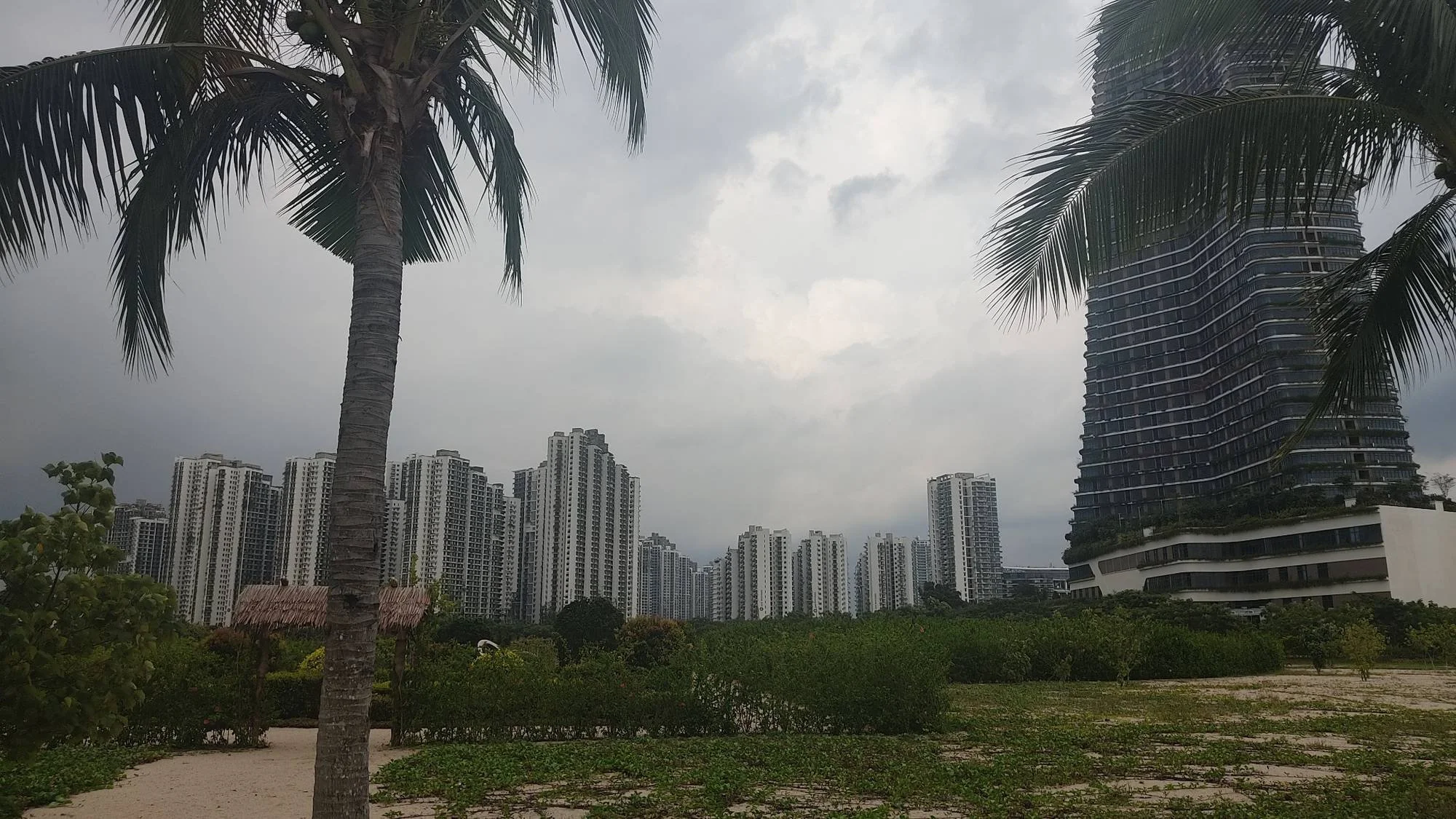
Forest City is one of Malaysia’s most unusual property markets. Built on reclaimed islands close to Singapore, the development was once promoted as a vast new international city before becoming better known for low occupancy, excess residential supply and its widely reported “ghost city” reputation.
That story is now changing. Forest City has been designated as a Special Financial Zone (SFZ) and incorporated into the wider Johor-Singapore Special Economic Zone. It also has its own category within Malaysia My Second Home (MM2H), offering substantially lower fixed-deposit requirements than the standard Silver, Gold and Platinum routes.
But a more favourable residency programme does not automatically make Forest City property a strong investment. For buyers primarily seeking capital growth, rental demand and easy resale, we would still approach Forest City cautiously. For someone whose main objective is obtaining MM2H residency at a lower financial entry point and who is comfortable owning a Forest City property for the long term, the calculation can be very different.
Is Forest City Malaysia Actually a Good Investment?
For most overseas buyers whose primary goal is property investment, Forest City would not currently be our first choice in Malaysia.
That does not mean the development has no future. Forest City's fundamentals have improved materially from the period that produced many of the negative headlines associated with the project. There is now a growing resident population, commercial activity, government-backed financial-zone incentives and a broader attempt to create employment rather than relying almost entirely on residential property sales.
However, several fundamental investment questions remain. A property investment ultimately needs sustainable demand from future tenants and buyers. Forest City still has a large amount of completed residential stock, while the master developer itself says that it is not planning further residential launches in the immediate future and is instead concentrating on clearing existing inventory.
For an investor, that matters. Buying into a market where the original developer remains a major source of competing stock can make resale more difficult, particularly if new buyers can obtain incentives or discounts directly from the developer.
Forest City therefore makes more sense when there is another strong reason to own there, residency, lifestyle, golf, proximity to Singapore or participation in the developing SFZ, rather than purely because a unit appears inexpensive.
What Has Changed at Forest City?
It would be equally misleading to assess Forest City entirely on headlines written several years ago. According to Country Garden Pacificview, the development now has around 20,000 residents across 66 completed residential blocks, with approximately 26,000 residential units completed overall. Forest City also attracts significant visitor numbers through its beach, golf resort and other amenities.
More importantly, the economic strategy has changed. Forest City is now part of the Johor-Singapore Special Economic Zone (JS-SEZ) and operates as its own Special Financial Zone. The island is being positioned around financial services, fintech, family offices and global business services, while mainland areas are intended to support logistics, manufacturing and industrial activity.
This is a fundamentally stronger proposition than building residential towers and simply hoping enough overseas buyers arrive to occupy them.
The developer says more than 40 single-family offices have already secured physical office space, while nine had received Securities Commission approval at the time of its September 2026 update. A healthcare hub anchored by a proposed 500-bed hospital and further industrial development are also planned.
These developments create genuine upside potential, but they should still be viewed as catalysts rather than guaranteed residential-property returns.
Why Forest City Still Carries Higher Investment Risk
The biggest issue is liquidity. Forest City has improved significantly in terms of activity and occupancy, but the residential market still has to absorb a large amount of existing stock. That creates competition not only between owners trying to resell, but also between resale owners and the developer's remaining inventory.
This is particularly important for foreign buyers because the potential resale audience is naturally narrower than it is in established Malaysian cities supported by substantial domestic demand.
Our broader guide to the best places to buy property in Malaysia makes this distinction important. Kuala Lumpur, for example, benefits from demand from local owner-occupiers, Malaysian investors, expatriates and overseas purchasers simultaneously. Penang also has substantial underlying local and lifestyle-led demand.
Forest City remains more dependent on its own success as a destination. There are several other considerations.
Singapore Is Close - But Connectivity Is Not Yet Seamless
Forest City is geographically very close to Singapore and sits near the Malaysia-Singapore Second Link.
That sounds extremely attractive on a map. In practice, the developer itself acknowledges that cross-border connectivity remains one of Forest City's biggest challenges. Current arrangements include shuttle services towards the Second Link immigration complex, while proposals for direct ferry services, improved highway connections and integration with future regional transport networks remain works in progress.
This is different from buying property close to an established transport connection. Improved connectivity could materially strengthen Forest City in future, but buyers should distinguish between infrastructure that exists today and infrastructure that is being proposed.
Residential Supply Remains Significant
The decision to pause new residential launches while existing stock is sold is arguably sensible, it should gradually reduce future supply pressure.
At the same time, it demonstrates why buyers need to be careful when assessing short-term appreciation. Forest City is not a supply-constrained residential market.
A low purchase price is only attractive if there is sufficient demand when you eventually want to sell.
Forest City's History Still Affects Buyer Perception
The project's earlier difficulties are well documented. Forest City fell short of its original sales and occupancy expectations, the pandemic disrupted its international buyer base, and Country Garden's wider financial difficulties in China created additional uncertainty around the development.
Country Garden Malaysia now says its Malaysian business operates independently and generates its own cash flow, while its domestic debt position has improved substantially.
That is positive. Nevertheless, property markets are influenced by perception as well as balance sheets, and Forest City's history may continue to affect some future buyers.

Why Forest City MM2H Is More Interesting
This is where the investment discussion becomes much more nuanced. Forest City has a dedicated SEZ/SFZ category under Malaysia My Second Home, and financially it is substantially more accessible than the standard national MM2H tiers.
Under the current official requirements:
| MM2H Route | Fixed Deposit | Visa Term | Annual Stay Requirement |
|---|---|---|---|
| Forest City SEZ/SFZ – age 21–49 | US$65,000 (approx. RM265,000 / £49,000) | 10 years, renewable | 90 days |
| Forest City SEZ/SFZ – age 50+ | US$32,000 (approx. RM131,000 / £24,000) | 10 years, renewable | No current minimum |
| Silver MM2H | US$150,000 (approx. RM612,000 / £113,000) | 5 years, renewable | 90 days if under 50; no current minimum at 50+ |
Currency equivalents are approximate using October 2026 exchange rates. Official MM2H fixed-deposit requirements are denominated in US dollars.
That difference is significant. Someone aged 50 or above can potentially access a renewable 10-year MM2H route with a fixed deposit of only US$32,000, compared with US$150,000 for the Silver category.
This is one of the strongest reasons an overseas buyer might consider Forest City even if they would not otherwise choose it purely as an investment market.
For applicants aged 21–49, the US$65,000 requirement is still considerably below Silver MM2H, although the 90-day annual presence requirement remains. Those days can currently be fulfilled between the principal applicant and eligible dependants under the programme rules.
For a detailed comparison of the national tiers, see our guide to MM2H Malaysia requirements, fixed deposits and property rules.
Do You Have to Buy Property for Forest City MM2H?
Yes. The Forest City SEZ/SFZ MM2H route requires the participant to purchase and own a qualifying property within Forest City.
Official MOTAC rules also specify that the MM2H property must be purchased directly from the property developer rather than from an existing owner, and that it generally cannot be sold for ten years. An upgrade to a higher-value residence is permitted under the programme rules.
This has an important consequence, a buyer considering Forest City purely because of MM2H is not simply placing a smaller fixed deposit. They are also accepting a long-term property commitment.
That makes property selection even more important, the question should not just be:
“Is Forest City MM2H cheaper?”
It should also be:
“Am I comfortable owning this particular property for at least ten years?”
What Is the Minimum Property Price for Forest City MM2H?
The current Forest City SEZ/SFZ MM2H property threshold starts from RM500,000, approximately £91,500 / US$122,400, for qualifying property purchased directly from a Forest City developer.
This is lower than the RM600,000 minimum property requirement under Silver MM2H, and considerably below the general foreign-buyer threshold that applies to many residential purchases elsewhere in Johor.
However, the RM500,000 threshold applies specifically to qualifying Forest City property under the SEZ/SFZ MM2H route. Buyers should therefore confirm that the individual property they are considering is eligible for the programme before paying a reservation fee.
The lower property threshold, combined with the reduced fixed-deposit requirement, is one of the main reasons Forest City can be attractive to buyers primarily seeking Malaysian residency rather than property investment alone.
Can Foreigners Buy Property in Forest City Without MM2H?
Yes. MM2H is not required simply to own qualifying property in Forest City. Foreign purchasers can buy eligible residential property subject to Malaysia's foreign ownership rules, the applicable Johor minimum purchase price and State Authority consent.
Many Forest City residential properties are marketed as freehold, but buyers should verify the tenure and title of the individual property through a Malaysian conveyancing lawyer rather than relying solely on project marketing.
The wider rules affecting foreign buyers are covered in our guide to buying property in Malaysia as a foreigner.
Is Forest City Property Freehold?
A substantial proportion of Forest City's residential stock is held under freehold tenure. However, that should not be interpreted as meaning every property offered across the wider Forest City area has an identical title structure.
A buyer's lawyer should conduct the appropriate title search and confirm:
whether the property is freehold or leasehold;
whether the title permits foreign ownership;
whether Johor State Authority consent is required;
whether any restrictions in interest apply; and
whether the property qualifies for MM2H if that forms part of the purchase strategy.
Freehold ownership can be attractive, but it does not solve the more important investment questions around demand, occupancy and resale liquidity.
Does Forest City Have Any Stamp Duty Advantages?
Potentially, yes. From 2026, foreign buyers of Malaysian residential property are generally subject to an 8% stamp duty rate on the instrument of transfer.
Forest City has a specific incentive for eligible completed properties on Pulau 1 of the Special Financial Zone. Qualifying purchases directly from the developer can receive a 50% remission on the transfer stamp duty and qualifying loan or financing agreement duty.
The conditions are quite specific. The relevant property must have been completed before 1 September 2024, the Sale and Purchase Agreement must fall within the qualifying period running from 1 September 2024 to 31 December 2034, and the transaction must satisfy the relevant verification requirements.
It therefore does not mean every Forest City purchase automatically receives a 50% stamp-duty discount. The distinction between direct developer stock and resale property is particularly important.
Our full guide to Malaysia property taxes and buying costs for foreigners explains the wider 2026 stamp-duty changes and ongoing ownership costs.
Is Forest City Still a “Ghost City”?
The description is increasingly simplistic. Forest City unquestionably experienced a period where its physical scale far exceeded its resident population, and that history explains how the label developed.
Today there is considerably more activity. The developer reported around 20,000 residents in 2026, alongside increased commercial activity, tourism, financial-zone development and plans to bring more employment directly into the township.
Calling it an empty city therefore no longer gives a particularly accurate picture of what exists today, but dismissing the original concerns completely would be equally unhelpful.
Twenty thousand residents across a development containing approximately 26,000 completed homes still illustrates the scale of the original residential ambitions, and Forest City remains a long way from becoming the fully mature city originally envisaged.
The relevant question for a buyer is not whether an old nickname is fair. It is whether real demand is developing quickly enough to support the property they are considering at the price they are being asked to pay.
Who Could Forest City Make Sense For?
Forest City becomes considerably easier to justify when the property purchase forms part of a wider lifestyle or residency strategy.
| Buyer Objective | Our View on Forest City |
|---|---|
| Accessing MM2H with a lower fixed deposit | Potentially compelling, particularly for buyers who genuinely want to live in or use Forest City. |
| Long-term lifestyle ownership | Worth considering if the location, golf, facilities and Singapore proximity suit the buyer personally. |
| Pure capital-growth investment | Higher risk. Existing inventory and resale depth need careful consideration. |
| Rental-income investment | More selective. Demand needs to be assessed development by development rather than assumed. |
| Short or medium-term resale | Generally a poor fit, particularly where an MM2H purchase creates a 10-year holding restriction. |
| Singapore-linked investment exposure | Potential upside exists, but Forest City's physical connectivity remains less established than the headline proximity suggests. |
This distinction matters. A retiree aged over 50 who wants long-term Malaysian residency, enjoys the environment and intends to retain the property for ten years could reach a perfectly rational decision to buy in Forest City.
An investor choosing between several Malaysian locations purely to maximise rental demand, liquidity and future resale options may reach the opposite conclusion. Both can be correct.
Is Forest City Better Than Buying Elsewhere in Johor?
Not necessarily, Johor itself has become increasingly interesting due to Singapore-linked employment, infrastructure investment and the wider Johor-Singapore economic relationship.
But Forest City and Johor Bahru should not be treated as the same property market. Parts of Johor Bahru benefit from existing urban employment, established neighbourhoods and transport links, while areas around the RTS corridor are supported by a clearer daily commuting use case.
Forest City's investment thesis is different. It relies much more heavily on the success of the SFZ, the development of its own employment base and future improvements in cross-border accessibility.
That creates potentially greater upside if the wider vision succeeds, but also greater execution risk.
Our guide to whether Johor is a good place to buy property for foreigners explores the wider market in more detail.
What Are the Alternatives to Forest City?
For buyers whose priority is investment rather than MM2H access, it is worth comparing Forest City with Malaysia's established markets before committing.
Kuala Lumpur generally offers the deepest pool of tenants and future buyers, particularly in well-located districts supported by employment and public transport.
Penang tends to appeal more strongly to lifestyle buyers, retirees and long-term residents, with established domestic demand supporting the market alongside foreign purchasers.
Johor Bahru can offer stronger Singapore-linked fundamentals in selected locations, particularly where employment and transport infrastructure already support genuine day-to-day demand.
Forest City is different, its appeal depends more heavily on policy incentives, residency benefits and belief in the long-term development of an entirely new economic centre.
That does not make it inherently worse, but it makes it a more specialised investment.
Bottom Line: Should You Buy Property in Forest City Malaysia?
Forest City is in a much stronger position than its most negative historical coverage suggests.
The Special Financial Zone, integration into the Johor-Singapore SEZ, growing resident population and effort to bring businesses and employment into the development all provide reasons to take its future more seriously.
The Forest City MM2H route is particularly noteworthy. Its fixed-deposit requirements are substantially lower than standard Mainland MM2H, making it a potentially attractive solution for buyers whose main goal is long-term Malaysian residency.
But a good residency solution and a good property investment are not necessarily the same thing. Forest City still carries greater resale, liquidity and execution risk than Malaysia's more established residential markets. Buyers using the MM2H route also need to be comfortable with a long holding period and the requirement to purchase qualifying developer property.
For a buyer focused principally on investment returns, we would generally look at other Malaysian markets first. For someone who genuinely wants Forest City as a long-term base and values the lower-entry MM2H route, however, the property may be better viewed as part of the cost and benefit of a broader residency strategy rather than as a standalone investment decision.
That is where Forest City becomes considerably more interesting.
Considering Property in Forest City?
At Alestria, we do not currently promote Forest City as part of our core Malaysia property portfolio because we believe it carries higher potential investment risk than more established parts of Johor, particularly around resale liquidity and the depth of underlying residential demand.
However, Forest City can still make sense for buyers whose primary objective is accessing the SEZ/SFZ MM2H route, rather than maximising property investment returns. In those cases, we can introduce suitable Forest City options through our local partners and help you compare the residency benefits against the property considerations.
If your priority is investment, rental demand or long-term resale potential, you may prefer to explore our properties for sale in Johor or contact us for help comparing the available options.
Forest City Malaysia: FAQs
-
Forest City has improved through its Special Financial Zone status, growing population and integration into the Johor-Singapore Special Economic Zone. However, substantial existing residential inventory and more limited resale depth mean we would still approach it cautiously as a pure investment. It may be more compelling for buyers who also value the Forest City MM2H route or intend to use the property personally.
-
Yes. Foreigners can buy qualifying property in Forest City subject to Johor's foreign ownership rules, minimum purchase requirements and State Authority approval where applicable.
-
The current fixed deposit is US$65,000 for applicants aged 21–49, approximately RM265,000 / £49,000, and US$32,000 for applicants aged 50 or above, approximately RM131,000 / £24,000.
-
Yes. The SEZ/SFZ MM2H category requires participants to purchase and own qualifying property in Forest City. Current rules also require the qualifying residence to be purchased directly from a property developer rather than an existing owner.
-
Current SEZ/SFZ MM2H rules state that the qualifying residence cannot normally be sold for ten years. An upgrade to a higher-value residence is permitted under the programme conditions.
-
Many residential properties in Forest City are held under freehold tenure, but buyers should verify the specific title through a Malaysian lawyer before purchasing.
-
No. The developer reported approximately 20,000 residents in 2026 alongside increasing commercial activity. However, Forest City remains significantly less mature than originally planned and still has substantial residential inventory to absorb.
-
Yes, in terms of the required fixed deposit. The Forest City SEZ/SFZ category currently requires US$65,000 for applicants aged 21–49 or US$32,000 for those aged 50+, compared with US$150,000 for Silver MM2H. The Forest City route does, however, require a qualifying property purchase within Forest City and comes with specific holding conditions.
