
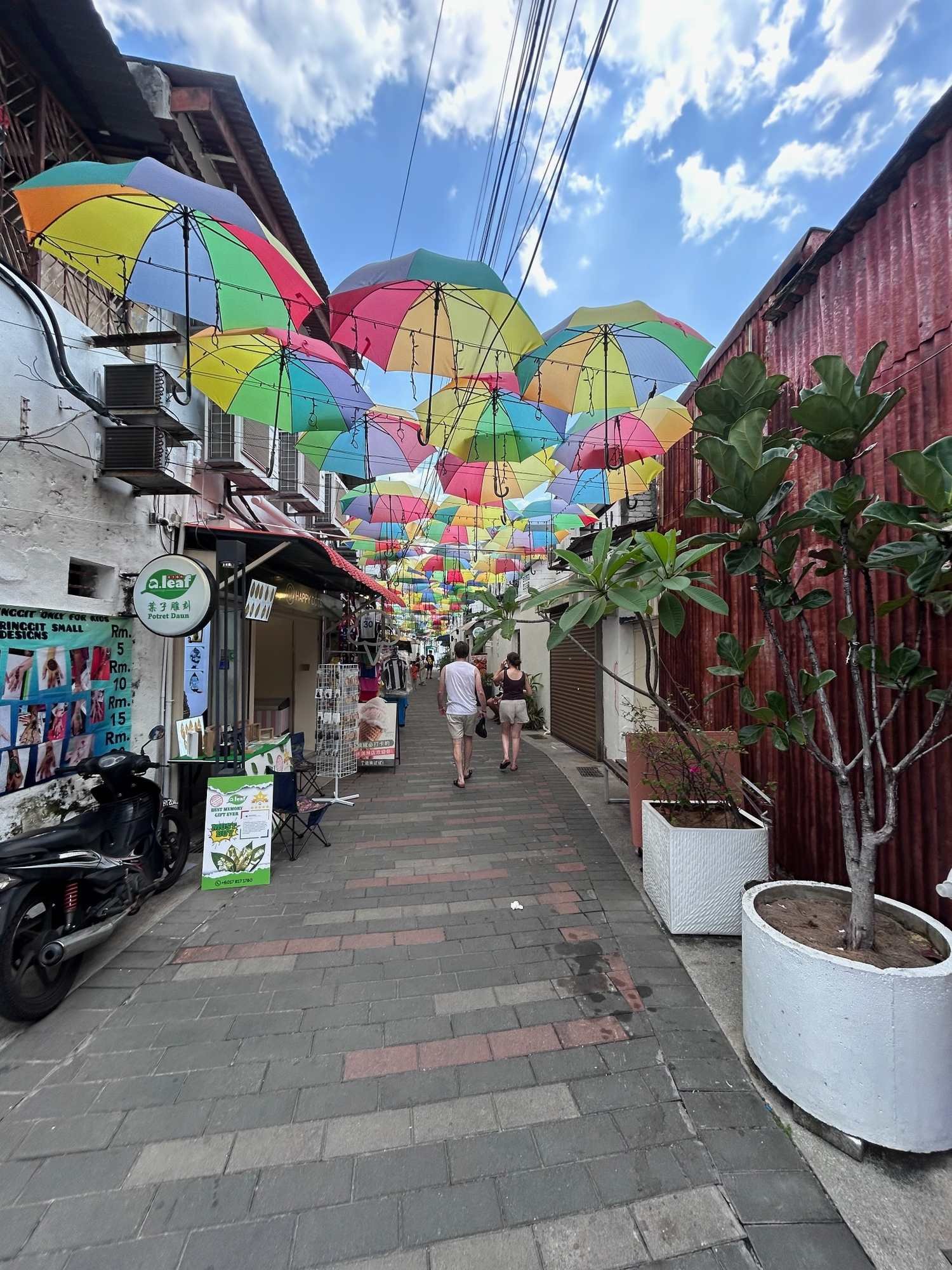
Photo © Alestria | George Town, Penang
Penang has been named one of National Geographic’s Best of the World destinations for 2027, putting another international spotlight on a part of Malaysia that has long attracted retirees, second-home buyers and people looking for somewhere they could genuinely live rather than simply holiday.
It is easy to understand the appeal. At the heart of Penang Island is George Town, a UNESCO World Heritage city where restored shophouses, temples, mosques, clan houses and colonial-era buildings sit alongside cafés, restaurants, boutique hotels and contemporary galleries. Its streets reflect centuries of Chinese, Indian, Malay, Peranakan, Arab and European influence, creating a city that feels distinctly Malaysian but unusually international at the same time.
Travel only a short distance from the city and the character changes again. Forested hills rise through the centre of the island, Penang Hill overlooks the coast, and residential neighbourhoods stretch north towards Tanjung Bungah and the beaches of Batu Ferringhi.
Across the Penang Strait, Seberang Perai adds another side to the state: traditional communities, mangrove-lined waterways, major industrial areas and growing residential districts.
That combination is what makes Penang unusual. It can offer historic city life, coastal living, tropical nature, established healthcare and everyday convenience within a relatively compact area.
For property buyers, that matters far more than a travel accolade on its own. National Geographic’s recognition is interesting because many of the qualities it highlights are the same ones that make Penang attractive for retirement, long stays and second-home ownership.
Penang in 2027: Key Takeaways
- National Geographic has selected Penang as one of its Best of the World destinations for 2027, highlighting its heritage, food, rainforest, coastline and cultural mix.
- George Town gives Penang a genuinely distinctive urban centre: UNESCO-listed streets, historic shophouses, temples, mosques, clan jetties, street art and one of Asia’s best-known food cultures.
- Penang combines city life with nature unusually well: rainforest-covered hills and beaches sit within a relatively compact island.
- New attractions in 2027 include the Penang Hill cable car and expanded eco-tourism experiences around the state’s rivers and mangroves.
- For property buyers, Penang is primarily a lifestyle-led market, particularly suited to retirees, second-home owners and people planning extended stays.
- Foreigners can legally buy qualifying property in Penang, while MM2H provides a separate long-stay residency route for eligible applicants.
Why Did National Geographic Choose Penang for 2027?
National Geographic’s 2027 feature presents Penang as a destination shaped by the contrast between George Town’s living heritage, the island’s rainforest and beaches, and the villages, rivers and mangroves of mainland Seberang Perai. It also highlights how successive communities have influenced Penang’s architecture, religion and particularly its food culture.
George Town remains central to that appeal. The city is not a preserved historic district that shuts down after tourists leave. Heritage buildings continue to contain homes, hotels, restaurants, workshops and businesses, while street-food stalls and traditional markets operate alongside newer cafés and restaurants.
Within a relatively small area, buyers and residents can move between historic streets, waterfront neighbourhoods, hospitals, shopping centres and modern residential developments.
Nature is unusually close too. Penang Hill rises immediately behind the urban area, while the northern side of the island leads towards forest, coastline and beaches.
That ability to combine an active city with a noticeably slower tropical lifestyle is one of Penang’s strongest advantages for people considering living there.

Photo © Alestria | George Town, Penang
What Makes 2027 Particularly Interesting for Penang?
The destination itself is not new. The 2027 angle comes from new experiences being added to an already established place.
One of the most prominent is the Penang Hill cable car, expected to connect the Penang Botanic Gardens with Penang Hill in under ten minutes. This will provide another route into one of the island’s most important natural areas and complement the existing funicular railway from Air Itam.
National Geographic also points to expanding eco-tourism around Penang’s rivers and mangrove habitats, particularly on the mainland.
These are useful additions, but they are not the reason Penang works as a long-term destination. The stronger story is that Penang already has the infrastructure of a place people can live comfortably, while continuing to improve the experiences that make living there enjoyable.
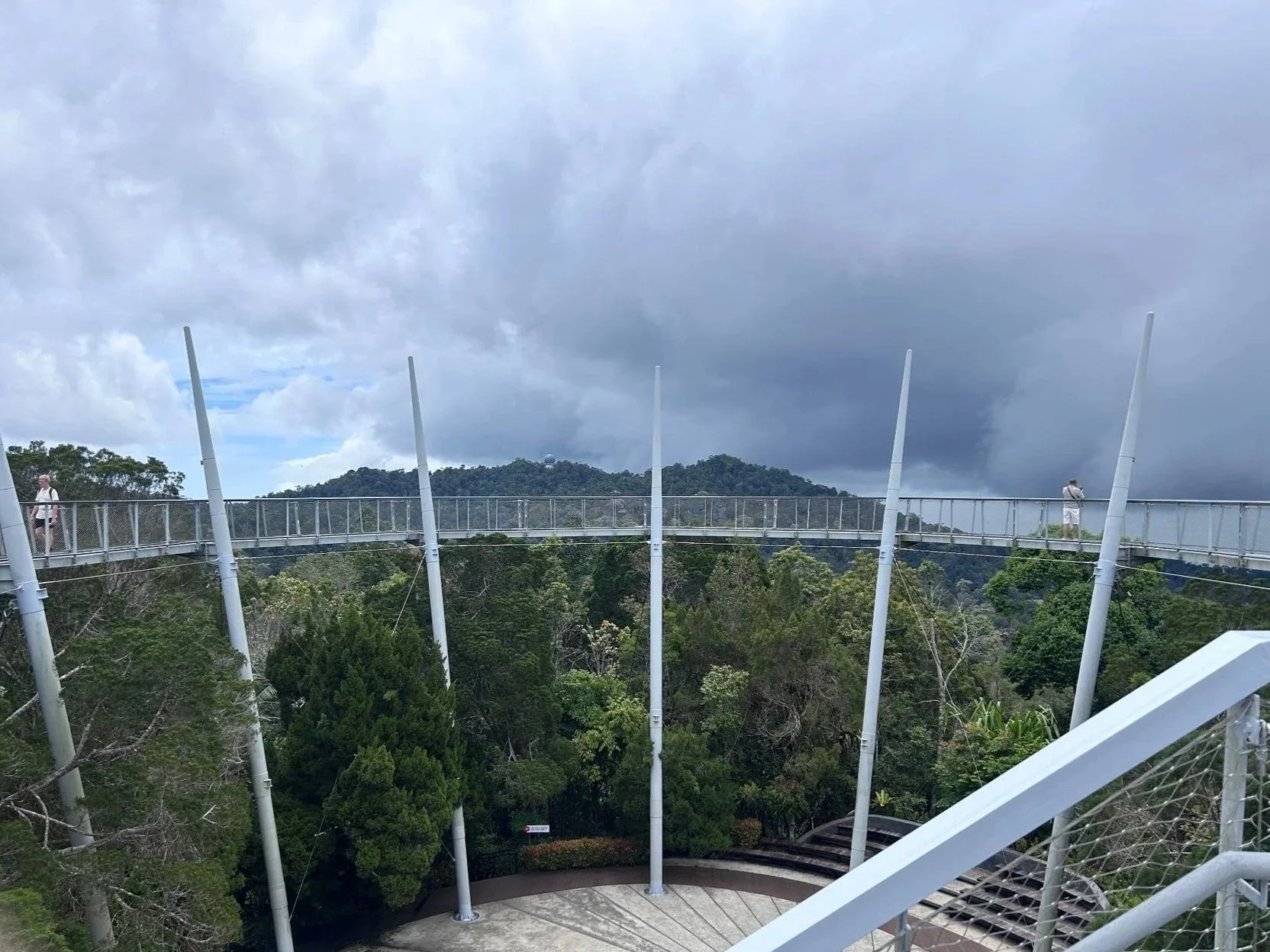
Photo © Alestria | Taken from Penang Hill
What Is It Actually Like to Live in Penang?
One of Penang’s biggest strengths is that the things visitors come to experience are also part of everyday life. A morning can begin with breakfast at a neighbourhood kopitiam or hawker centre, while modern shopping centres, private hospitals and supermarkets remain close at hand. George Town provides restaurants, galleries, heritage streets and nightlife, while the coast and forested hills are never particularly far away.
For overseas residents, the transition is also relatively easy.
English is widely used, private healthcare is well established, international schools serve expatriate families, and Penang has decades of experience accommodating foreign residents and retirees.
The island is compact enough that buyers do not need to choose between complete isolation and city living. Tanjung Bungah, for example, offers a coastal residential environment while remaining within reach of George Town. Gurney and Andaman Island offer newer waterfront living close to the city, while Batu Ferringhi pushes further towards a resort-style lifestyle.
Penang International Airport provides connections across Malaysia and the wider region, while Kuala Lumpur, Singapore, Bangkok and other Asian hubs are readily accessible.
Then there is the food. Penang’s reputation is not simply based on having a large number of restaurants. Its food reflects the same cultural mixture visible in its architecture and neighbourhoods, from Malay and Indian-Muslim cooking to Chinese, Nyonya and Peranakan traditions. National Geographic specifically makes this cultural and culinary mixture central to its case for Penang.
For somebody considering spending several months each year, or eventually retiring there, those everyday qualities matter.
Penang feels like somewhere with enough depth to remain interesting after the novelty of being on holiday has worn off.

Photo © Alestria | George Town, Penang
Which Parts of Penang Are Best for Different Buyers?
One of Penang’s advantages is that buyers can choose quite different lifestyles without moving particularly far geographically.
| Area | What It Feels Like | Typically Suits |
|---|---|---|
| George Town | Historic, lively and urban, with restaurants, culture, healthcare and heritage close at hand. | Buyers who value city life, character and convenience. |
| Gurney / Andaman Island | Modern waterfront living close to central Penang, shopping, dining and established amenities. | Buyers seeking newer premium residences and easy access to George Town. |
| Tanjung Bungah | An established coastal residential area between George Town and Batu Ferringhi, with schools and everyday amenities nearby. | Long-term residents, families, retirees and second-home buyers. |
| Batu Ferringhi | More relaxed and resort-oriented, with beaches, sea views and a slower pace. | Lifestyle and holiday-home buyers prioritising the coast. |
| Bayan Lepas | More modern and employment-led, with convenient access to the airport and Penang’s major technology and industrial areas. | Professionals, long-term residents and buyers prioritising employment and connectivity. |
Someone retiring to the island may prioritise Tanjung Bungah for its balance of coast, healthcare and everyday convenience. A buyer wanting modern waterfront living may prefer Gurney or Andaman Island, while somebody who wants to step outside into historic streets, cafés and restaurants may be drawn closer to George Town.
That variety is part of Penang’s appeal as a place to live rather than simply a property market.
Our guide to the best places to buy property in Penang looks at the different locations in more detail.
Why Penang Is Primarily a Lifestyle-Led Property Market
Penang should not necessarily be judged in the same way as Kuala Lumpur. Kuala Lumpur has a much larger corporate and employment market and tends to offer a wider range of investment-led opportunities.
Penang’s proposition is more personal. Many overseas buyers are considering somewhere they intend to spend significant time themselves, whether for retirement, several months each year, family use or an eventual move to Malaysia.
That changes what matters when selecting a property. Proximity to healthcare, shops, restaurants and the coast may matter more than chasing the highest headline rental yield. A practical layout and comfortable living environment may be more important than selecting the smallest unit purely because it appears easier to rent.
The ability to walk or make short journeys to everyday amenities can matter enormously once a property becomes a home rather than an occasional investment.
This is also why larger apartments can appeal strongly in Penang. Buyers planning to spend months at a time in Malaysia often want proper living space, guest bedrooms and a home that feels suitable for long-term use rather than a compact city investment unit.
For the right buyer, that is arguably one of Penang’s strengths.
Could National Geographic’s Recognition Affect Penang Property?
Potentially, but primarily through greater international visibility rather than any immediate effect on property values.
National Geographic’s Best of the World list reaches a large global audience and reinforces Penang’s position as an internationally recognised lifestyle destination.
More awareness can support tourism, longer stays and eventually interest from people considering living or owning a home there. But a travel accolade should never be treated as a property investment thesis on its own. There is no sensible reason to assume that appearing on a ‘best places’ list automatically means property prices will rise.
The more interesting point is that National Geographic is recognising the same underlying qualities that already make Penang attractive to long-term residents: culture, food, nature, heritage and the unusual ability to move between an active city and a slower tropical lifestyle within a relatively small area.
The accolade therefore strengthens Penang’s international profile rather than fundamentally changing the property market.
Healthcare Is One of Penang’s Biggest Advantages for Long-Term Living
Healthcare becomes much more important when somebody moves from asking ‘Would I enjoy visiting Penang?’ to ‘Could I actually live there?’
Penang has an established private healthcare sector serving both Malaysian residents and international patients.
Hospitals such as Island Hospital, Gleneagles Hospital Penang, Loh Guan Lye Specialists Centre and Penang Adventist Hospital provide private medical services across the island. That concentration of healthcare is particularly relevant to retirees.
Living somewhere tropical and comparatively affordable is one thing; being able to access established private hospitals without routinely travelling to Kuala Lumpur or Singapore makes long-term living considerably more practical.
It also influences where some buyers choose to live, with areas around George Town, Gurney and Tanjung Bungah providing relatively convenient access to major medical facilities.
Our guide to Penang healthcare for expats and property buyers explores this in more detail.

How Does MM2H Fit Into Living in Penang?
Malaysia My Second Home can provide a long-term residency route for eligible foreign residents who want to make Penang more than an occasional holiday destination.
The current federal MM2H programme includes Silver, Gold and Platinum categories with different fixed-deposit requirements, property thresholds and visa durations.
A residential property purchase is compulsory after MM2H approval under the current federal programme. However, it is important to separate the two decisions. Buying property in Penang does not itself provide Malaysian residency, and foreigners do not need MM2H simply to own qualifying Malaysian property.
For someone intending to retire or spend significant periods in Penang, the sensible approach is therefore to consider the property purchase and long-term immigration strategy alongside each other.
Our Malaysia residency resources explain the available routes and current MM2H requirements in more detail.

Can Foreigners Buy Property in Penang?
Yes, foreign buyers can legally purchase qualifying property in Penang, subject to the applicable state minimum purchase price, property eligibility and State Authority approval.
Condominiums are generally the most straightforward ownership option for overseas buyers, although qualifying landed property may also be available subject to additional restrictions and thresholds.
Foreign purchasers typically appoint a Malaysian conveyancing lawyer to review the Sale and Purchase Agreement, carry out the necessary checks and manage the state consent and transfer process.
The important point is that foreign ownership in Malaysia is well established, but the rules vary by state. Penang therefore has its own requirements rather than simply following one national minimum property price.
Our wider guide to buying property in Malaysia as a foreigner explains the process in more detail.
What Type of Buyer Is Penang Best Suited To?
Penang makes the strongest case when the buyer values the property for more than its financial return.
That includes:
Retirees seeking healthcare, food, community and an established environment for long-term living.
Second-home buyers wanting a tropical base they can use for part of each year.
Families attracted by international schools, space and a more relaxed residential environment.
Lifestyle investors who still want rental potential but expect to use the property themselves.
MM2H applicants looking for somewhere that works as a genuine home rather than purchasing property simply to satisfy a residency requirement.
By contrast, somebody interested only in maximising short-term rental yield may find stronger opportunities elsewhere. That does not necessarily make Penang a weaker property market. It simply means the reasons for buying need to match the characteristics of the destination.
Is Penang a Good Place to Buy Property in 2027?
For the right buyer, yes. Penang combines characteristics that are difficult to find together in a single destination: a historic and culturally rich city, established private healthcare, coastal living, tropical rainforest, international schools, regional connectivity and a mature community of long-term foreign residents.
National Geographic’s inclusion of Penang among its Best of the World destinations for 2027 reinforces the island’s international profile, but the strongest case for owning property there existed before the accolade.
Penang works because it is a place people can imagine building a life around. You can spend the morning in George Town, have lunch overlooking the coast, live close to modern hospitals and shopping centres, and still have rainforest-covered hills rising behind the city.
For buyers considering retirement, extended stays or a second home in Southeast Asia, that combination deserves serious consideration.
Considering Property in Penang?
Alestria works with established developers and local partners across Penang, including opportunities in Tanjung Bungah, Andaman Island and other key residential areas.
The properties featured on our website represent only a selection of what is available. We can also carry out a tailored search based on your preferred location, budget, property size, lifestyle requirements and plans for Malaysia.
Explore our properties for sale in Penang or contact us to discuss what you are looking for.
Penang in 2027: FAQs
-
National Geographic included Penang in its Best of the World 2027 list for its combination of George Town’s living heritage, multicultural food and architecture, rainforest, beaches and expanding nature-based experiences. New additions for 2027 include the Penang Hill cable car and further eco-tourism experiences around the state’s rivers and mangroves.
-
For many long-term residents, yes. Penang combines private healthcare, international schools, widely spoken English, established residential neighbourhoods, regional airport connections and an international community with its food, heritage and coastal lifestyle.
-
Penang can be particularly attractive to retirees, second-home owners, lifestyle buyers and people planning extended stays. It is generally better suited to buyers who value lifestyle and long-term use rather than those focused solely on maximising short-term rental yield.
-
Yes. Foreigners can purchase qualifying property in Penang subject to state minimum purchase requirements, property eligibility and State Authority approval. Condominiums are generally the most straightforward option for overseas buyers.
-
No. Foreign buyers do not need MM2H simply to purchase eligible property in Penang. MM2H is a separate long-stay residency programme that may be relevant if you intend to live in Malaysia for extended periods.
-
Popular areas include Tanjung Bungah, George Town, Gurney, Andaman Island, Batu Ferringhi and Bayan Lepas. The best location depends on whether the buyer prioritises city access, coastline, healthcare, schools, employment, modern waterfront living or a quieter resort environment.
-
There is no guarantee. International recognition can increase awareness of Penang and strengthen its profile as a tourism and lifestyle destination, but property performance depends much more on location, supply, demand, property quality and the individual development.
-
One of the most prominent additions expected in 2027 is the new Penang Hill cable car linking the Penang Botanic Gardens with Penang Hill. Penang is also expanding eco-tourism experiences around its rivers, mangroves and natural areas.
