
Malaysia vs Dubai Property in 2026: Why Some International Buyers Are Looking Beyond the Gulf
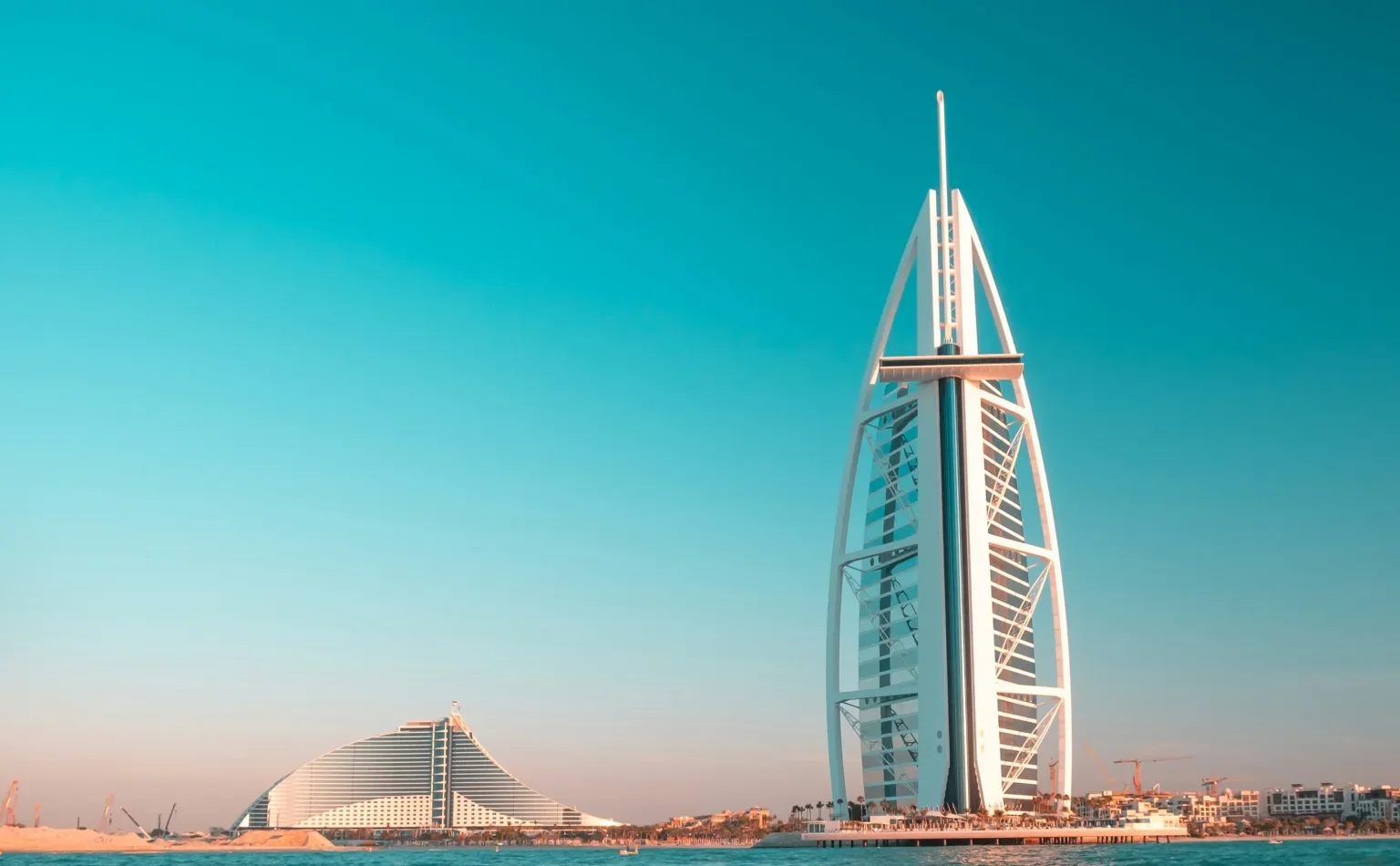
For much of the past decade, Dubai has been one of the world’s defining international property stories.
Rapid population growth, zero personal income tax, global connectivity, luxury branding, and strong rental yields transformed the city into a magnet for overseas capital. Investors from the UK, Europe, Russia, India, China, and increasingly Africa all poured into the emirate in search of returns, residency pathways, and exposure to one of the fastest-growing real estate markets in the world.
In many ways, the numbers justified the attention. Dubai recorded more than 200,000 residential transactions during 2025, while values across several prime districts surged following the post-pandemic boom years. Rental growth accelerated sharply, new branded residences launched across the city, and investor appetite appeared almost relentless.
But in 2026, the conversation surrounding Dubai property is beginning to evolve. Not because Dubai has suddenly become weak. Far from it. Rather, because some international buyers are starting to ask different questions.
Questions about long-term sustainability. Questions about affordability. Questions about geopolitical concentration risk. Questions about whether the next decade of international property growth may look different from the last.
And increasingly, some of those conversations are leading buyers toward Southeast Asia, particularly Malaysia.
Malaysia vs Dubai Property: Key Takeaways
- Dubai remains one of the world’s strongest investor markets: High rental yields, strong global demand, and tax efficiency continue to attract international buyers in large numbers.
- Malaysia is emerging as a broader lifestyle and infrastructure story: The country is increasingly benefiting from major investment into technology, manufacturing, data centres, and the Johor–Singapore Special Economic Zone.
- Some investors are seeking diversification beyond the Gulf: Regional geopolitical tensions and rising pricing in Dubai are encouraging certain buyers to explore alternative international markets.
- Malaysia offers significantly lower long-term living costs: Many overseas buyers can access larger homes, lower-density developments, and lower ownership costs compared with equivalent Dubai budgets.
- Residency pathways differ considerably: Dubai’s investor visa structure is directly linked to property investment thresholds, while Malaysia offers routes including MM2H and PVIP.
- The right market depends on buyer priorities: Dubai may appeal more to yield-focused and globally mobile investors, while Malaysia often attracts buyers prioritising liveability, affordability, and long-term regional positioning.
Dubai’s Rise Changed Global Property Investment
Dubai’s success was not accidental. Over the past fifteen years, the city positioned itself exceptionally well for a world increasingly shaped by global mobility, remote wealth, entrepreneurship, and international capital flows.
Few cities combined:
low taxation
strong infrastructure
luxury lifestyle branding
business accessibility
modern real estate stock
international air connectivity
…as effectively as Dubai.
The result was a market capable of attracting both institutional money and individual investors at enormous scale.
For many international buyers, Dubai became the modern version of what Singapore, Hong Kong, London, and New York represented during earlier property cycles: a globally recognised wealth hub with aspirational appeal.
That positioning accelerated dramatically following the pandemic. As remote work reshaped international mobility and governments across the world tightened taxation, Dubai became increasingly attractive to entrepreneurs, investors, and internationally mobile professionals seeking flexibility.
Population growth surged. Rental demand tightened. Prices climbed rapidly.
But markets do not remain in explosive growth phases forever.
Dubai in 2026 Is Entering a More Mature Phase
One of the most important shifts happening in 2026 is that Dubai increasingly appears to be transitioning away from its post-pandemic acceleration phase and into something more mature.
That does not mean prices are expected to collapse, most analysts still expect growth across many parts of the city, but expectations are becoming more measured.
Instead of dramatic double-digit annual surges, conversations are increasingly focusing on:
stabilisation
supply pipelines
sustainable rental demand
infrastructure absorption
long-term market balance
This is a natural evolution for any rapidly growing international city. The challenge for Dubai is not demand, the challenge is sustaining exceptional growth rates while continuing to deliver large volumes of new supply across multiple segments simultaneously.
For some buyers, that is creating a subtle psychological shift. Dubai is increasingly being viewed less as an emerging hyper-growth story and more as an established global investment market.
That distinction matters, because once a market becomes established, investors start assessing it differently.
Some International Buyers Are Now Seeking Diversification
Another factor shaping international buyer behaviour is geopolitical diversification. Over the past several years, the Middle East has experienced repeated periods of regional instability and heightened geopolitical tension.
Dubai itself has remained remarkably resilient throughout much of this period. However, some investors are increasingly reassessing how concentrated they want their wealth exposure to be within any single region.
That does not mean international demand for Dubai is disappearing, clearly it is not.
But it does mean certain buyers are beginning to explore alternatives that offer:
lower geopolitical visibility
lower entry pricing
broader lifestyle flexibility
long-term residency options
diversification beyond the Gulf
This is one reason Southeast Asia is attracting renewed attention. And among Southeast Asian markets, Malaysia is increasingly standing out.
Malaysia’s Investment Story Has Changed Significantly
Historically, Malaysia was often viewed primarily as a retirement or second-home destination, that perception is increasingly outdated.
The country’s economic and infrastructure profile has evolved considerably over the past several years, particularly as global supply chains continue diversifying away from China and technology investment accelerates across the ASEAN region.
Malaysia is now benefiting from multiple structural trends simultaneously.
Major international technology firms are investing heavily into:
AI infrastructure
cloud computing
semiconductor production
hyperscale data centres
At the same time, the Johor–Singapore Special Economic Zone (JSSEZ) is reshaping international attention toward southern Malaysia. The long-term implications of deeper Singapore–Johor economic integration could be substantial.
For international property investors, that matters because infrastructure-led growth stories often create entirely new layers of housing demand:
skilled professionals
multinational staff
logistics businesses
technology workers
long-term regional relocations
Malaysia’s appeal is no longer based purely on low costs. Increasingly, it is being viewed as a country positioned to benefit from broader regional economic shifts.
Malaysia Offers Something Dubai Often Cannot: Lifestyle Practicality
One of the most overlooked aspects of international property investment is the difference between investment excitement and day-to-day liveability.
Dubai excels at ambition, luxury, and global positioning, Malaysia often performs better on practicality.
For many overseas buyers, particularly those relocating for part of the year or considering eventual long-term residency, everyday affordability still matters enormously.
In Malaysia, foreign buyers can often access:
larger homes
lower-density developments
more spacious layouts
lower monthly ownership costs
established neighbourhood environments
…at price points that remain difficult to replicate in many international cities.
This becomes particularly noticeable when comparing ongoing ownership expenses rather than simply purchase prices. Many international buyers underestimate how strongly long-term holding costs influence overall property satisfaction.

The Residency Conversation Is Also Different
Residency has become increasingly central to international property decisions.
Dubai’s residency structure is relatively straightforward from a marketing perspective. Property investment thresholds can lead directly into renewable residency pathways and longer-term visa structures, including the UAE Golden Visa framework. This simplicity has been extremely effective commercially.
Malaysia’s approach is more layered. Malaysia My Second Home (MM2H) remains the country’s best-known residency pathway, although the programme has undergone several revisions and now operates through multiple financial tiers and conditions.
Alongside MM2H, Malaysia Premium Visa Programme (PVIP) is increasingly attracting attention from globally mobile applicants seeking longer-term flexibility within Southeast Asia.
Unlike Dubai’s heavily property-linked model, Malaysia’s residency landscape is broader and often more lifestyle-oriented. For some buyers, that complexity is a drawback, for others, it offers flexibility.

Yield Is Not the Only Metric That Matters
Dubai continues to outperform Malaysia on headline rental yields in many segments, that is undeniable.
| Market | Typical Gross Apartment Yield | Primary Demand Driver |
|---|---|---|
| Dubai | 6%–8% | Strong international investor demand and rapid population growth |
| Kuala Lumpur | 4%–5% | Expat demand, multinational firms, and prime city-centre rentals |
| Penang | 3%–5% | Lifestyle-led long-stay demand and limited prime coastal supply |
| Johor Bahru | 5%–6% | Singapore-linked demand, the RTS link, and SEZ-driven growth expectations |
But increasingly, international buyers are evaluating markets through a much wider lens.
Questions now often include:
How sustainable is the growth?
How expensive is long-term ownership?
How exposed is the market to future oversupply?
Could I realistically live there?
What happens if geopolitical conditions change?
Does the market still feel early, or already mature?
Those questions often lead to very different conclusions depending on the buyer.
Malaysia and Dubai Ultimately Serve Different Buyer Profiles
In reality, Malaysia and Dubai are not direct substitutes for one another. Dubai remains one of the world’s premier globally liquid investment markets.
Malaysia increasingly appeals to buyers seeking a different balance:
affordability
liveability
regional diversification
long-term residency flexibility
infrastructure-led growth exposure
lower-pressure ownership environments
That distinction is important, because the future of international property investment may not belong exclusively to the loudest markets or the fastest-growing skylines. Increasingly, buyers are also prioritising resilience, practicality, and quality of life, and that is where Malaysia’s proposition is strengthening considerably in 2026.
Final Thoughts
Dubai remains an extraordinary global real estate success story. Its infrastructure, ambition, international branding, and investment momentum continue to place it among the world’s most important property markets.
But some international buyers are beginning to look beyond pure growth narratives. For those buyers, Malaysia offers something increasingly valuable: a combination of affordability, regional positioning, infrastructure growth, residency flexibility, and long-term lifestyle practicality that is becoming harder to find in many global cities.
That does not make Malaysia ‘better’ than Dubai, but it does make it increasingly relevant in the global property conversation.
If you are exploring international property opportunities across Malaysia, you can browse our latest developments here:
Malaysia vs Dubai Property FAQs for International Buyers
-
In many cases, yes. Malaysia generally offers lower entry pricing, lower long-term living costs, and larger property sizes compared with equivalent budgets in Dubai. Foreign buyers can often access prime condominiums in Kuala Lumpur, Johor, or Penang at significantly lower prices than comparable Dubai districts.
-
Dubai generally offers higher headline rental yields, particularly in established apartment investment areas. Gross apartment yields in Dubai are often estimated around 6%–8%, while Kuala Lumpur and Johor commonly range between roughly 4%–6% depending on location and project quality.
-
Some international buyers are increasingly seeking geographic diversification, lower entry pricing, and more lifestyle-oriented markets. Rising prices in Dubai, large future supply pipelines, and broader geopolitical tensions in the Middle East are encouraging some investors to explore Southeast Asia more seriously.
-
Malaysia is increasingly attracting attention due to infrastructure growth, technology investment, improving regional connectivity, and comparatively low living costs. Projects linked to the Johor–Singapore Special Economic Zone, Kuala Lumpur’s business districts, and established Penang lifestyle locations are drawing increasing foreign buyer interest.
-
Yes. Both Malaysia and Dubai allow foreign property ownership in designated sectors and developments. However, Malaysia operates with state-level minimum purchase thresholds for foreign buyers, while Dubai generally uses designated freehold zones.
-
Malaysia offers several long-stay residency pathways, including MM2H and PVIP, although these are not as directly tied to property purchases as Dubai’s investor visa structures. Financial requirements, fixed deposits, and eligibility conditions vary depending on the programme.
-
The Malaysia Premium Visa Programme (PVIP) is a long-term residency initiative aimed at higher-net-worth international applicants. Compared with MM2H, PVIP is generally positioned as a more flexible federal-level residency option for globally mobile individuals and families.
-
Kuala Lumpur, Johor Bahru, and Penang remain among the most established foreign buyer markets. Kuala Lumpur attracts business and investment-focused buyers, Johor benefits from Singapore-linked growth and infrastructure expansion, while Penang appeals strongly to lifestyle and long-stay purchasers.
-
Yes. Dubai remains one of the world’s strongest international property markets, supported by population growth, global investor demand, tax efficiency, and strong rental performance. However, many analysts expect the market to move into a more stabilised growth phase following several years of exceptionally rapid expansion.
-
This depends on personal priorities. Dubai may suit buyers seeking a fast-paced international city environment, strong yields, and global connectivity, while Malaysia often appeals to buyers prioritising affordability, liveability, lower ownership costs, and long-term regional lifestyle flexibility.
